
Last updated September 10, 2026
Full 25-point door and opener safety check with every visit - springs, cables, rollers, tracks, and your LiftMaster or Chamberlain opener included
You get a price before we start. It does not change when the truck arrives.
 Before
 After
After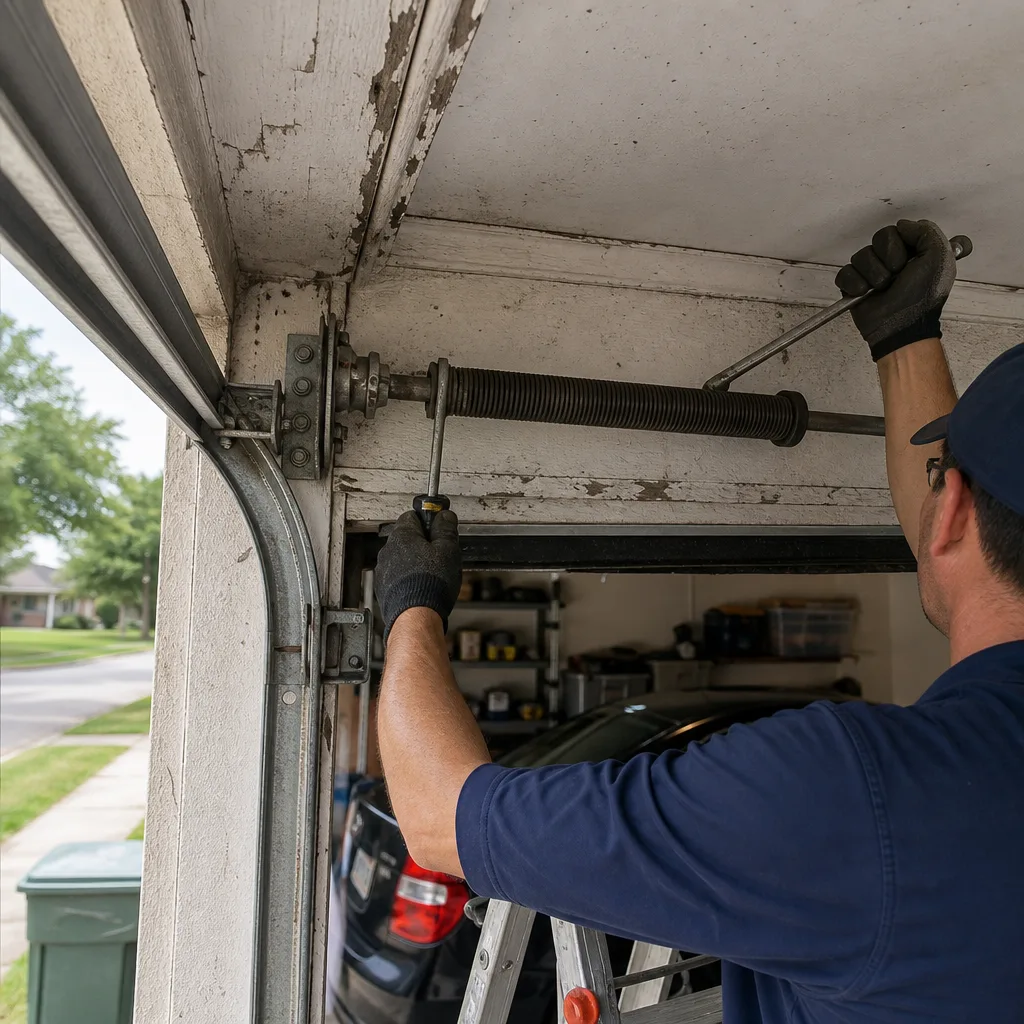 Before
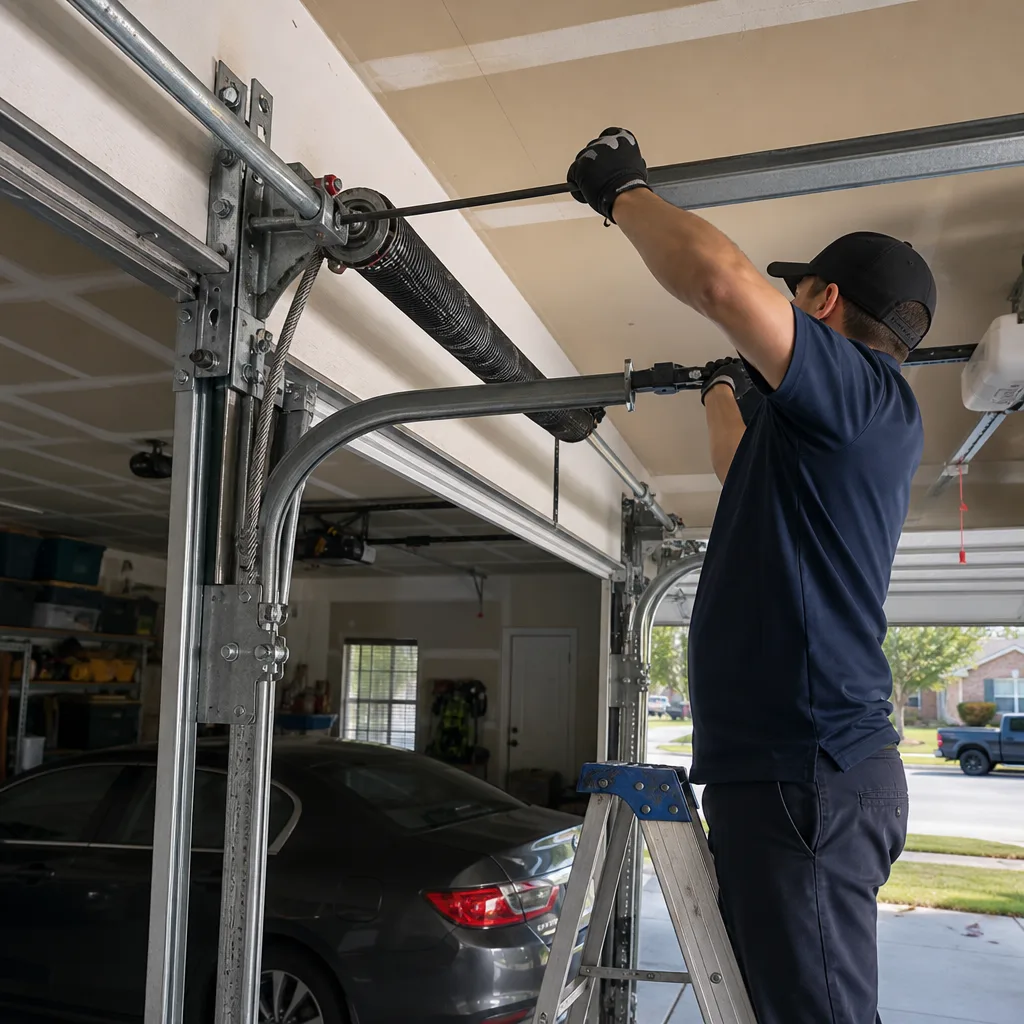 After
After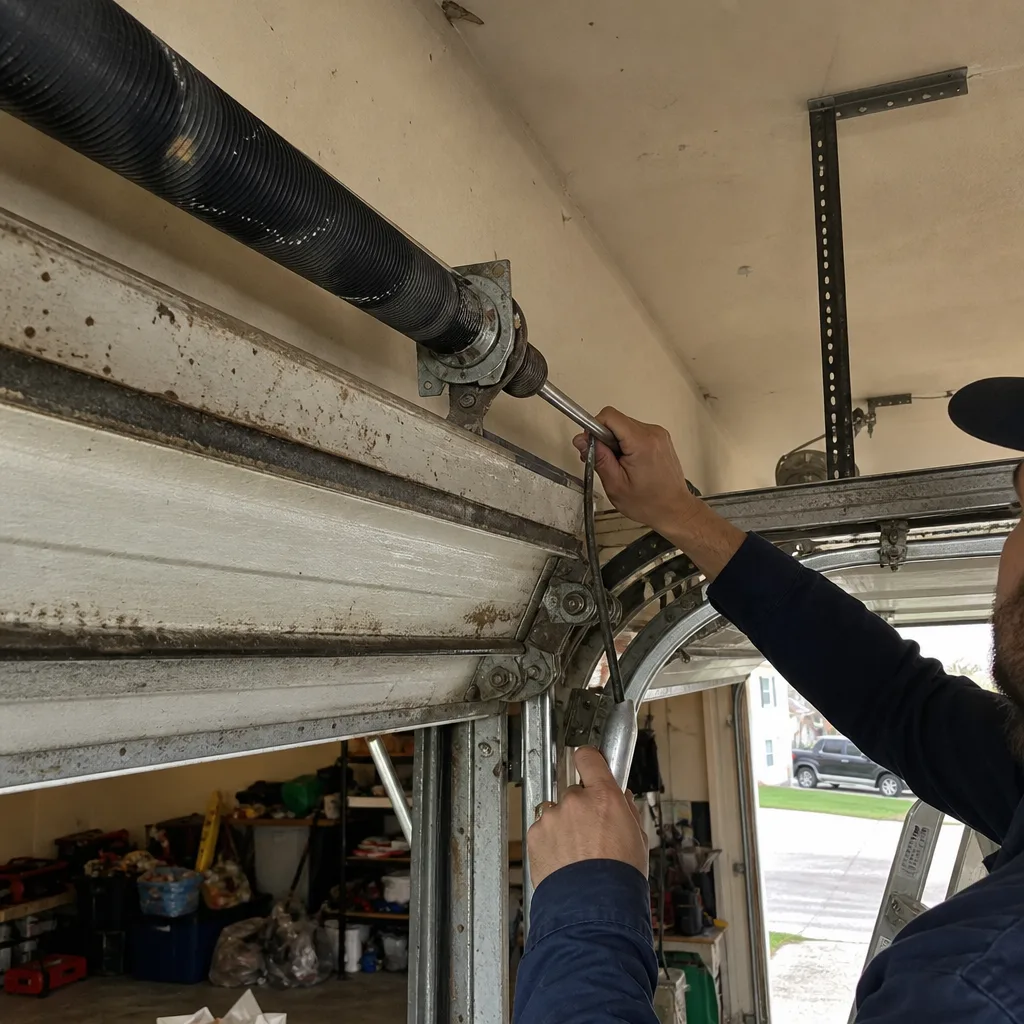 Before
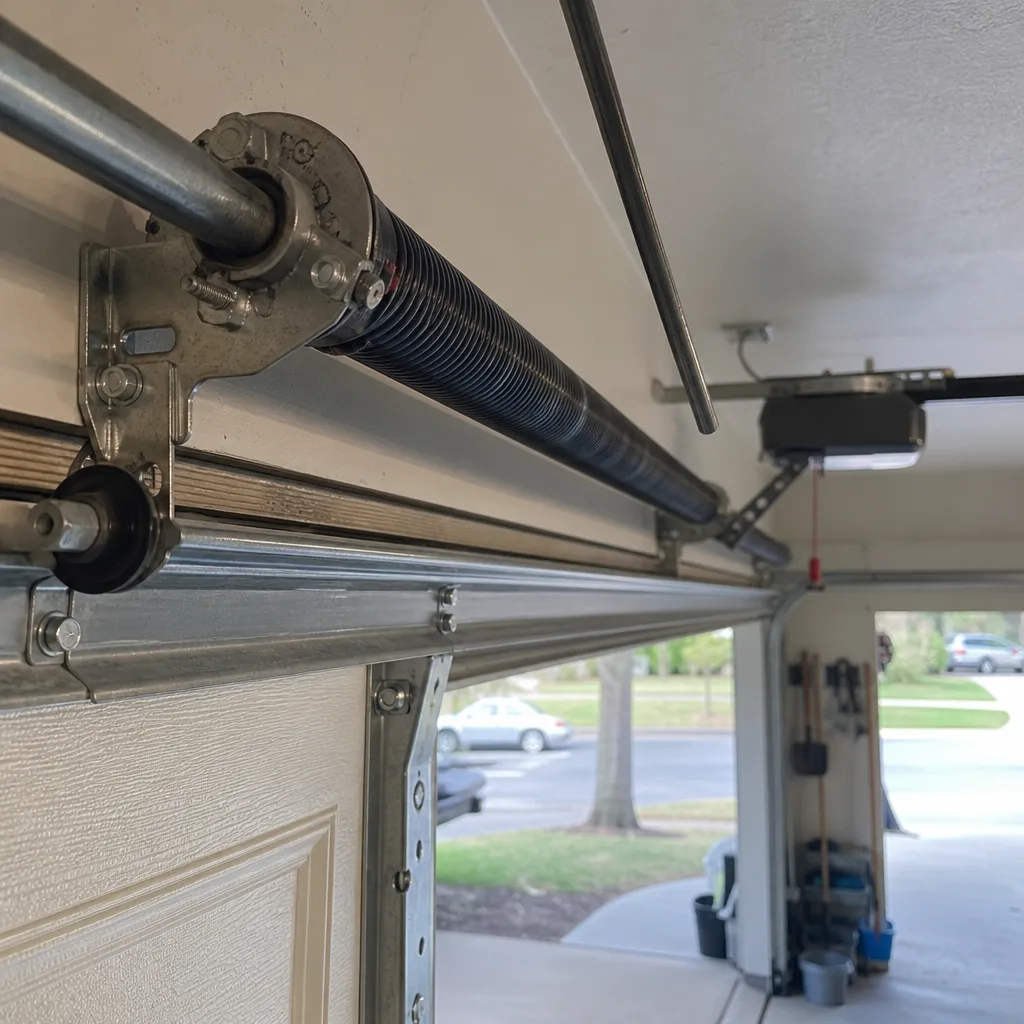 After
AfterSeasonal Garage Door Care for Arlington: Year-Round Homeowner’s Guide
Arlington’s hardest month for garage doors isn’t January - it’s October, when the first cold snap hits metal hardware that spent five months expanding in 100°F heat. Contraction cracks seals, tightens cables, and surprises homeowners who thought summer was the hard part. In our 42 years serving Tarrant County, we’ve learned that Arlington doesn’t follow a tidy four-season calendar. The city has two punishing seasons and two narrow transition windows, each creating distinct problems for garage doors. This guide tracks what actually happens month by month, so you know what to check, when to check it, and what can wait - or explore more guides & resources for year-round garage door care.
Quick Answer
Garage doors in Arlington need focused attention in four phases: summer heat protection (June-September), fall contraction checks before the first cold snap (October-November), winter freeze-thaw damage prevention (December-February), and spring storm reinforcement before Tarrant County hail season (March-May). The single most important habit is a monthly 30-second visual track inspection - it catches 80% of developing problems before they become emergency calls, as detailed in The Complete Guide to Garage Door in Arlington.
Table of Contents
- Summer Heat: What 100°F Days Do to Your Door (June-September)
- Fall Contraction: The October Surprise (October-November)
- Winter Freeze-Thaw: Ice Storms and Frozen Seals (December-February)
- Spring Storm Prep: Hail and Straight-Line Winds (March-May)
- The 30-Second Monthly Inspection That Prevents 80% of Emergency Calls
- What to Lubricate, What to Leave Alone
- Garage Door Opener Care in Arlington’s Climate
- Common Mistakes to Avoid
- When to Call a Professional
- Frequently Asked Questions
- The Bottom Line
Summer Heat: What 100°F Days Do to Your Door (June-September)
From late May through September, Arlington garages become solar ovens. An attached garage with a south- or west-facing door can hit 120°F internally, and that heat changes how every component behaves. We’ve replaced more torsion springs in August than any other month - not because springs fail randomly, but because sustained heat above 95°F alters metal fatigue in predictable ways.
Torsion spring tension increases with temperature. A spring calibrated for 70°F operation carries measurably more load at 100°F. The spring doesn’t know it’s overheating; it simply works harder, cycle after cycle, until microscopic stress fractures propagate. In neighborhoods like Southwest Arlington and along Matlock Road, where afternoon sun bakes garage exteriors for six hours straight, we see spring life shortened by 15-20% compared to shaded north-facing installations.
Track expansion is real and measurable. Steel vertical tracks expand roughly 0.6 inches per 100 feet per 100°F temperature change. On a standard 8-foot residential door, that’s negligible - until you factor in thermal cycling. Morning shade, afternoon sun: the track grows, contracts, grows again. Over a decade, this loosens lag bolts and wall brackets. We’ve found track mounting brackets completely detached in Pantego and Dalworthington Gardens homes where the original installer used standard hardware without expansion-rated fasteners.
Opener thermal overload is the hidden summer failure. Modern openers, including newer LiftMaster and Chamberlain models, have internal thermal cutoffs that shut the motor when housing temperature exceeds safe limits. In an uncooled garage, this happens. The homeowner presses the button, hears a click, nothing moves. Twenty minutes later, it works again. This pattern repeats until the motor’s insulation degrades permanently. If your opener quits between 2 PM and 6 PM on 100°F days and revives by evening, thermal overload is the cause. A ceiling fan, louvered vent, or simply keeping the garage door cracked an inch during peak heat prevents this - one choice covered in our DIY vs Professional Garage Door: The Arlington Homeowner’s Decision Guide.
Summer checklist:
- Test door balance monthly: disconnect opener, lift manually to waist height. It should stay put. If it drifts up or drops, spring tension is off.
- Inspect weatherseal for hardening and UV cracking. Arlington’s UV index peaks in July; rubber degrades faster here than in cloudy northern climates.
- Check opener housing temperature after a hot afternoon run. Warm is normal; too hot to touch indicates ventilation problems.
- Verify safety reverse sensors are clean. Dust from dry summer yards coats lenses and causes intermittent failure.
Our $89 Seasonal Tune-Up includes spring tension verification, track bolt torque check, and opener thermal baseline reading - scheduled before August, it catches heat stress before it becomes a 10 PM emergency call.
Fall Contraction: The October Surprise (October-November)
October is Arlington’s most expensive month for preventable garage door damage. After five months of expansion, every metal component contracts rapidly when the first strong cold front drops temperatures 30°F in 12 hours. The door that ran smooth on September 30 binds, grinds, or fails completely by October 15.
Cable tension spikes dangerously. Lift cables, already tightened by summer expansion, become overtightened as drums and shafts contract. The cable doesn’t stretch; steel doesn’t work that way. Instead, the extra load transfers to the bottom bracket and cable anchor points. We’ve replaced dozens of bottom brackets in Arlington’s October weeks, always on doors that showed no warning signs in September. The cable isn’t broken; the bracket is, torn out by tension it was never meant to hold.
Weatherseal compression sets permanently. Summer heat softens the vinyl or rubber seal at the door’s bottom. It conforms to concrete irregularities, small pebbles, the gap under the threshold. Then October cold hardens it in that distorted shape. By November, the seal no longer contacts the floor evenly. Light shows through. Rain from Arlington’s fall frontal systems runs under the door. In the Prestonwood and Forest Hills areas, where lot grading sends drainage toward garages, this means wet floors, rusted bottom panels, and eventually wood rot on older Craftsman-style doors.
Hinge pins seize in their bushings. Dust from summer, combined with dried lubricant, becomes a grinding paste. Cold thickens it. The #1, #2, and #3 hinges (center of the door, highest movement) develop flat spots on their pins. You hear it before you see it: a rhythmic clunk at the same point in every open/close cycle.
The October contraction checklist we use on every fall service call:
- Measure cable tension with the door fully closed. We use a cable tension gauge; homeowners can observe whether cables sit flat in drum grooves or ride high with visible strain.
- Inspect weatherseal for memory set. Close the door from outside on a sunny day. Look for light gaps. Any continuous gap over 1/8 inch means replacement before rain arrives.
- Cycle the door manually and listen. Grind at hinge #2 means disassembly, cleaning, and fresh lubrication - not more spray on top of dirt.
- Check spring anchor bolts and center bearing plate. Contraction loosens these faster than expansion tightens them. A loose anchor bolt lets the spring torque against wood instead of steel.
The fall transition window is narrow: two, maybe three weekends before consistent cold arrives. We schedule heavier in October than any month except January, because catching contraction damage early prevents the winter failures that follow.
Winter Freeze-Thaw: Ice Storms and Frozen Seals (December-February)
Arlington’s winters are mild until they’re not. A typical December day hits 55°F; then a Gulf moisture surge meets Canadian air and we get ice. Not snow - ice. It coats every surface, including the bottom seal frozen to the concrete slab. How you respond in the first hour determines whether you need a $25 seal replacement or a $400 panel repair.
Never force a frozen door open. The seal is vinyl or rubber, softened by internal plasticizers, hardened by cold. When frozen to concrete, it has the grip of a clamp. The opener strains, cables tighten, and something gives. Usually it’s the seal, tearing away from its retainer. Sometimes it’s the bottom panel, buckling as the opener applies 1/2 horsepower to a fixed object. We’ve seen Wayne Dalton and Raynor bottom panels creased beyond repair because a homeowner used the remote repeatedly, hoping the ice would “break loose.”
The right response takes 10 minutes. Pour warm (not boiling) water along the seal line. Use a plastic windshield scraper, never metal, to separate seal from concrete. Once free, dry the seal and apply silicone spray to both seal and concrete contact area. This prevents refreezing if temperatures stay low. If you must leave before the door operates, disconnect the opener (red emergency release cord) and lift manually after the seal is freed. The opener re-engages with a simple click when power-cycled.
North Texas ice storms create secondary problems. Tree limbs weighted with ice fall on garage door sections. The damage looks catastrophic - a dented top panel, bent top section - but is often repairable if the section hasn’t torn from its hinges. After any ice storm, inspect from inside the garage with the door closed. Look for hinge distortion, section separation at panel joints, and track misalignment where impact force transferred. Document with photos for insurance; most homeowner policies cover storm damage to attached structures.
Cold-weather lubricant selection matters. Standard garage door lubricant thickens below 30°F. We use lithium-based grease on screw-drive openers and synthetic spray lubricant rated to 0°F on hinges and rollers. Petroleum-based products, including WD-40 used as lubricant rather than cleaner, gum in cold and attract moisture that refreezes.
Winter in Arlington is short but sharp. The doors that survive intact are the ones whose owners checked the seal before the ice arrived and knew not to force what wouldn’t move.
Spring Storm Prep: Hail and Straight-Line Winds (March-May)
Tarrant County’s severe weather season runs March through May, with peak hail activity in April. Arlington sits in the southern edge of Tornado Alley; straight-line winds of 70+ mph accompany many spring thunderstorms. Garage doors are the largest opening in most homes, and the most vulnerable to pressure damage.
Wind pressure is the hidden killer. A 16-foot wide by 7-foot tall garage door presents 112 square feet of surface area. At 70 mph, wind pressure exceeds 20 pounds per square foot - over 2,200 pounds total force pushing inward. Standard residential doors are rated for 15-20 psf. The door doesn’t need a direct hit; sustained pressure bows the center section, pops it from track, and the door fails. Once one door fails in a multi-car garage, internal pressure builds and roof uplift begins.
What reinforcement actually helps:
- Vertical reinforcement struts on the interior face of each panel, spanning full door height. These convert flexible sections into rigid plates that transfer wind load to the track. A single strut on a 16-foot door adds meaningful resistance; two struts (one at each third point) bring most doors to 25+ psf rating.
- Heavy-duty track brackets and backhangs that anchor the horizontal track to ceiling joists or wall framing. Standard builder-grade brackets pull from lightweight blocking; upgraded brackets with lag bolts into structural members prevent track blowout.
- Wind load-rated doors for new installation or replacement. Clopay and Amarr manufacture doors specifically tested to ASTM E330 and E1886 standards. These aren’t “storm doors” in the decorative sense; they’re engineered assemblies with reinforced sections, heavy-gauge track, and positive-locking roller stems.
What doesn’t help: Plywood sheets screwed to the exterior. They add weight without structural connection, block emergency egress, and void door warranties. Tape on windows (if your door has them) is equally ineffective against pressure failure.
Pre-storm checklist for Arlington’s spring:
- Verify door balance and auto-reverse function. A door that doesn’t reverse on obstruction will fight against debris impact instead of yielding.
- Inspect weatherseal and threshold. Wind-driven rain penetrates gaps that gravity-fed water misses.
- Check opener force settings. Factory settings assume a properly balanced door; if springs have weakened over winter, the opener works harder and may not reverse properly under load.
- Know your manual release. If power fails during a storm, you need egress without tools.
In the 2012 and 2019 Arlington hail events, we replaced over 200 door sections and 60 complete doors. The homes with reinforced doors suffered panel dents but maintained structural integrity; unreinforced doors often required full replacement plus track and opener damage repair.
The 30-Second Monthly Inspection That Prevents 80% of Emergency Calls
Every emergency call we field in Arlington starts with a problem that was visible weeks earlier. The homeowner didn’t know to look, or didn’t know what they were seeing. This inspection takes 30 seconds with the door stationary and lit. Do it the first Saturday of each month.
Step 1: Visual track scan (10 seconds)
Stand inside the garage, door closed, lights on. Look at the vertical track on each side. The track should be plumb (perfectly vertical) and the gap between track and door edge consistent from bottom to top. Any bow, bend, or twist in the track is abnormal. Any roller that has jumped the track, or sits crooked in its bracket, is a failure in progress. We’ve found rollers hanging by their stem, still functional but one vibration from dropping the door off-track entirely.
Step 2: Cable condition (10 seconds)
With the door closed, the lift cables run vertically from bottom brackets to drums at the top of the door. Look for fraying - individual wires separating from the cable bundle like bristles on a brush. Look for rust, which indicates moisture intrusion and internal corrosion. Look for kinks or flat spots, which mean the cable has rubbed against something or been overloaded. A frayed cable doesn’t fail gradually; it fails when the remaining strands can’t hold the load, usually mid-cycle with the door half-open.
Step 3: Spring observation (5 seconds)
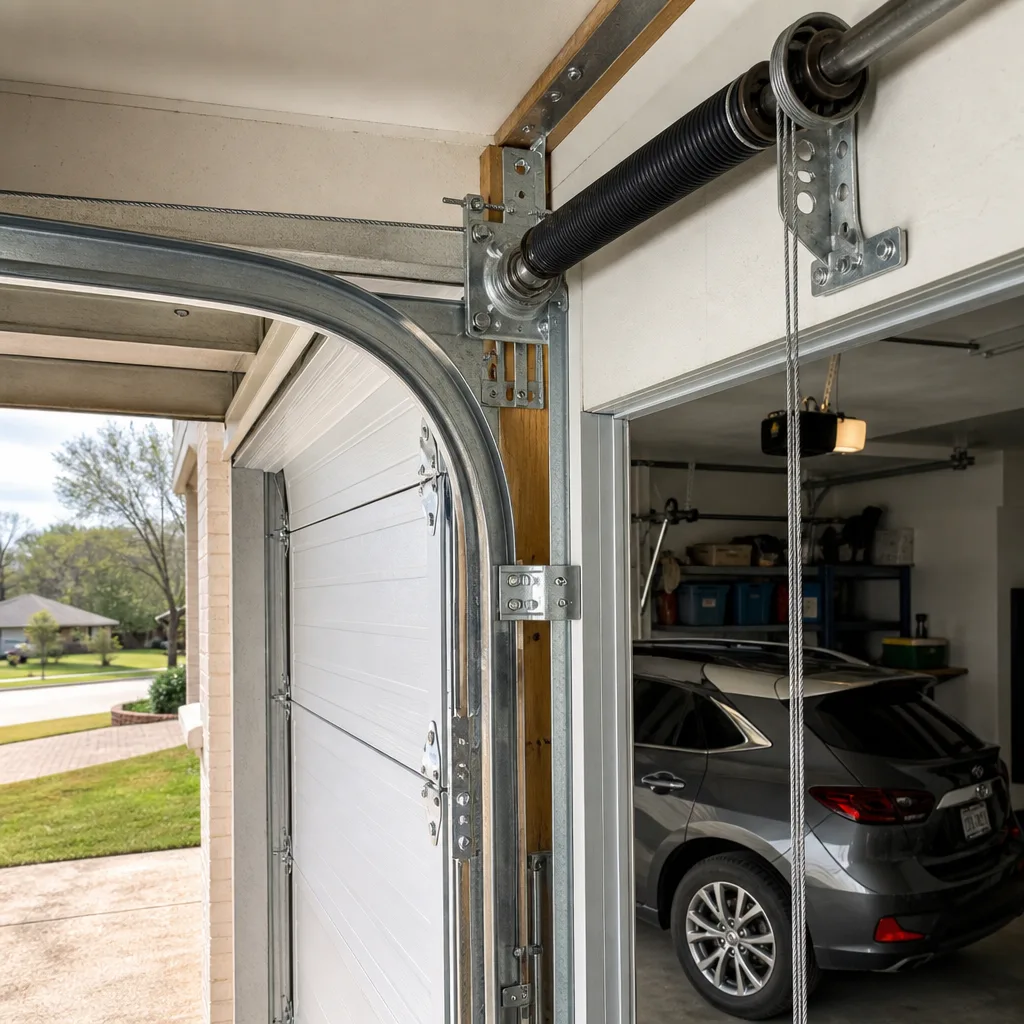
Torsion springs sit horizontally above the door. You don’t touch them. You look for gaps in the coil - spaces where the spring has broken but the remaining coils still hold enough tension for the door to operate. A two-spring system with one broken spring runs rough, opens slowly, and strains the opener. A single broken spring on a one-spring door is an immediate safety hazard; the door can fall uncontrolled.
Step 4: Hardware tightness (5 seconds)
Glance at hinge screws, roller bracket bolts, and track mounting hardware. You’re not torque-wrenching; you’re spotting obvious looseness. A hinge screw backed out 1/4 inch catches the eye. A track bolt missing its nut is visible. These are the failures that become 10 PM calls when the last hinge screw drops and the door jams half-open.
What you find determines response: loose hardware, schedule service. Frayed cable or spring gap, call within 48 hours. Door off-track or hanging uneven, call immediately and don’t operate. This inspection has no substitute. Our technicians perform it on every service call, but the 29 days between our visits belong to the homeowner.
What to Lubricate, What to Leave Alone
Garage door lubrication is simple in principle and frequently botched in practice. The wrong product on the wrong component causes more problems than no lubrication at all. After four decades in Arlington, we’ve cleaned enough gummed hinges and replaced enough contaminated rollers to state this clearly.
Lubricate these:
- Hinge pins and bushings: Light synthetic spray, one second per hinge. Work the door through a cycle to distribute. Wipe excess; it attracts dust.
- Roller bearings (if steel, not nylon): One drop of light oil on the bearing, never on the roller tread. Nylon rollers are self-lubricating; oil degrades the wheel material.
- Lock mechanism: Graphite powder, not liquid lubricant. Liquid freezes in winter and gums in summer.
- Weatherseal: Silicone spray on the seal face that contacts concrete. Prevents freezing and reduces friction wear.
Never lubricate these:
- Torsion springs: The coils don’t need lubrication, and spray lubricant attracts dust that becomes abrasive paste. Some installers coat springs to reduce coil friction noise; this is cosmetic, not functional, and requires specific products.
- Track interior: Rollers need traction, not slip. Oiled tracks cause rollback on inclines and irregular stopping. Clean tracks with solvent if dirty; never lubricate.
- Opener chain or belt: Modern openers have sealed lubrication. Adding product attracts debris and voids warranties. Screw-drive openers need manufacturer-specified grease at service intervals; generic lubricant damages the drive.
- Bottom brackets or cable attachments: These are under extreme tension. Lubricant doesn’t help and makes inspection harder. If a bottom bracket needs attention, it needs replacement, not oil.
Product selection for Arlington’s climate: Avoid petroleum-based sprays that oxidize in heat. We use synthetic lubricants with PTFE (Teflon) rated for -35°F to 200°F. The $8 can lasts two years and prevents the $200 service call for seized hinges in October.
Garage Door Opener Care in Arlington’s Climate
Garage door openers are the most neglected component and the most complex. A modern opener is a small computer controlling a high-torque motor, with safety sensors, force limits, and travel calibration that must stay correct through Arlington’s thermal extremes. The opener that worked fine in March struggles in August and fails in October if not maintained.
Force settings drift with temperature. The opener doesn’t sense temperature directly, but the door’s operating resistance changes. Stiff hinges in cold weather increase resistance; the opener interprets this as obstruction and reverses. Weak springs in heat reduce resistance; the opener doesn’t detect actual obstructions. We recalibrate force and travel limits on every seasonal tune-up, matching the opener to current door condition rather than factory defaults.
Safety sensors fail predictably. The photo eyes at door base transmit an infrared beam. Dust, spider webs, and leaf debris block it. In Arlington’s windy spring and dry summer, this happens monthly. The diagnostic LED on most LiftMaster and Genie sensors changes from steady to flashing when misaligned or blocked. Clean lenses with a dry cloth; realign by loosening wing nuts, centering both units at the same height, and tightening while observing the LED.
Battery backup is code in Texas for new installations. Arlington follows the Texas Administrative Code requirement for battery backup on new opener installations, ensuring operation during power failure. Test backup function twice yearly: unplug opener, verify door operates on battery. Replace battery every 2-3 years; the sealed lead-acid units degrade faster in garage temperature extremes.
Opener age and replacement timing: Chain-drive openers from the 1990s and early 2000s are common in Arlington’s established neighborhoods - Dalworthington Gardens, parts of Pantego, older sections of Southwest Arlington. These units lack modern safety features and consume 3-4 times the electricity of current DC motor models. We don’t push replacement on functional equipment, but when a 20-year opener needs major repair, the cost difference to a modern, efficient unit with battery backup and smartphone connectivity is often under $200.
For opener service, repair, or replacement evaluation, our Garage Door Opener in Arlington page details current models and upgrade paths.
Common Mistakes to Avoid
- Ignoring the door until it won’t move. Arlington homeowners who wait for total failure pay 3-4 times more than those who catch problems during the monthly inspection. A frayed cable caught early: $180-$250. The same cable failing at 10 PM, dropping the door off-track: $600-$900.
- Using the wrong lubricant. WD-40 is a solvent, not a lubricant. On garage door components, it strips existing grease, attracts dust, and creates abrasive sludge. We’ve replaced hinge sets completely gummed with years of misapplied product.
- Adjusting spring tension without training. Torsion springs store lethal energy. The winding bars, cable tension, and release procedures require specific tools and knowledge. Every year in Tarrant County, homeowners are injured attempting DIY spring adjustment. This is not a savings; it’s a gamble with permanent consequences.
- Sealing the garage too tightly. Modern weatherstripping and threshold seals are effective - sometimes too effective. A garage with gas water heater or furnace needs combustion air. Sealing every gap can create negative pressure that pulls flue gases back into the home. Maintain the 1-inch code-required gap at door bottom or install a dedicated combustion air inlet.
- Replacing only one spring on a two-spring door. Matched springs age together. A new spring paired with a fatigued old spring creates imbalance, strains the opener, and guarantees a second service call within months. We replace springs in matched pairs, always.
- Assuming summer is the safe season. Arlington’s heat causes as much damage as winter cold, just differently. The homeowner who skips summer inspection because “nothing freezes” misses spring fatigue, track expansion, and opener thermal stress that become October failures.
- Delaying weatherseal replacement. A cracked seal seems cosmetic until rainwater reaches the bottom panel interior. Steel panels rust from inside; wood panels delaminate. The $45 seal becomes a $300 panel, or a $1,200 door if rust spreads.
When to Call a Professional
Some garage door work belongs to trained technicians with the right tools and the right parts on the truck. Call for service when you observe: a broken spring or cable (door won’t lift, lifts unevenly, or slams closed); a door off its track or hanging at an angle; an opener that hums but doesn’t move the door; repeated reversal without obstruction; or visible damage after storm impact. These conditions involve high-tension components that can cause serious injury without proper handling.
Carl Dutton and the team at Mainspring Garage Door Co. home provide free estimates in Arlington - call (817) 241-8437. Our technicians arrive with springs, cables, rollers, and openers for all major brands, and most repairs are completed in a single visit. Every job carries our 90-Day Done Right Promise in writing: if it’s not right, we return at no charge, no paperwork, no dispute.
Frequently Asked Questions
Once yearly is sufficient for most Arlington homes, timed before the harshest season your door faces. South- and west-facing doors in full sun benefit from a pre-summer check; shaded doors do well with a fall service before contraction stress begins. Our $89 Seasonal Tune-Up includes balance test, hardware torque check, lubrication, and safety sensor verification - see Garage Door Cost Breakdown: The Arlington Homeowner’s Reference for 2026 for full pricing context. Call (817) 241-8437 to schedule.
Spring failure, by volume. Torsion springs are calibrated for approximately 10,000 cycles (roughly 7 years of typical use), but Arlington’s heat and thermal cycling accelerate metal fatigue. We replace more springs in August and October than all other months combined. The warning sign is a door that feels heavy to lift manually or opens slowly with opener strain.
Homeowners can safely lubricate hinges, roller bearings (steel only), and weatherseal with the correct products. Leave spring, cable, and track lubrication to professionals - wrong products or application methods cause damage that exceeds any savings. If you’re unsure which product matches your components, our technicians apply proper lubricant as part of any service call.
Most common repairs in the Arlington market range from $180 for cable replacement to $340 for spring replacement, with opener repairs typically $200-$400 depending on component. We state the flat price before any work begins, and our $50 Off Any Repair Over $250 applies automatically. For an exact quote on your specific door, call (817) 241-8437 - estimates are free.
Thermal expansion of metal components, or opener thermal overload. Morning cool allows normal operation; afternoon heat expands track, increases spring tension, or triggers the opener’s internal temperature cutoff. This pattern is diagnostic - it points to specific causes we verify and correct. Don’t wait for total failure; intermittent problems become permanent ones.
A functional door in good cosmetic condition rarely needs replacement for resale. A damaged, noisy, or unreliable door significantly reduces offers - buyers interpret garage door problems as signals of deferred maintenance elsewhere. We offer free second opinions on any written replacement estimate, ensuring you don’t over-invest. For new doors, our Garage Door Installation in Arlington page details options and pricing.
Yes. Our phones are staffed by a live person 24 hours a day, including nights, weekends, and holidays. Most emergency calls in Arlington are answered within two hours, and our trucks carry the parts to complete repairs in a single visit. Call (817) 241-8437 anytime - no phone trees, no voicemail.
The Bottom Line
Arlington’s garage doors face two hard seasons and two transition windows, each with distinct threats. Summer heat fatigues springs and expands track. October contraction cracks seals and overtightens cables. Winter ice freezes doors to slabs. Spring storms test structural limits with wind and hail. The homeowner who wins this calendar checks their door monthly, lubricates correctly, and calls before small problems become emergencies. The 30-second track inspection, done consistently, prevents most after-hours calls we receive. For everything else - spring replacement, storm reinforcement, opener service, or a professional assessment of what your door needs this season - Garage Door Repair in Arlington from Mainspring Garage Door Co. delivers a square deal, stated upfront, backed in writing.
Written by Carl Dutton, Owner at Mainspring Garage Door Co., serving Arlington since 2016.