
Last updated September 10, 2026
Full 25-point door and opener safety check with every visit - springs, cables, rollers, tracks, and your LiftMaster or Chamberlain opener included
You get a price before we start. It does not change when the truck arrives.
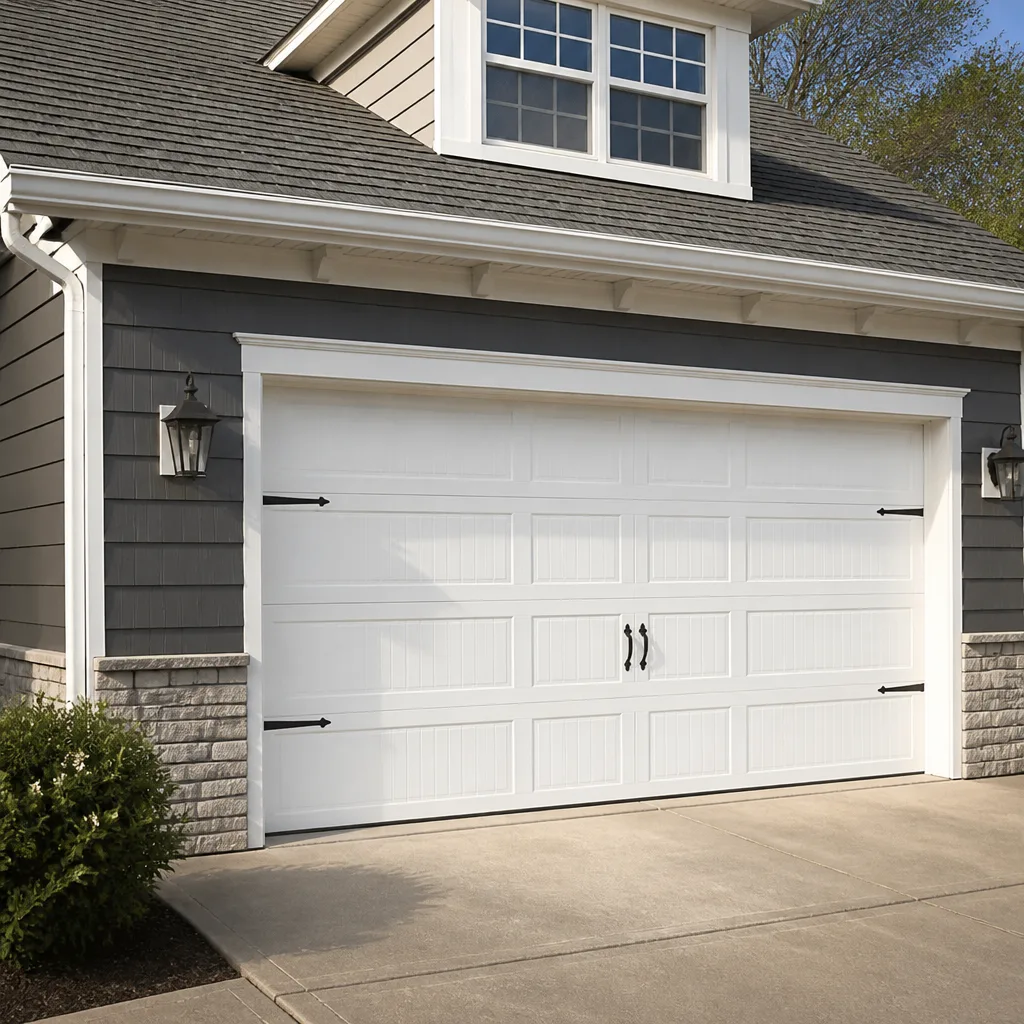
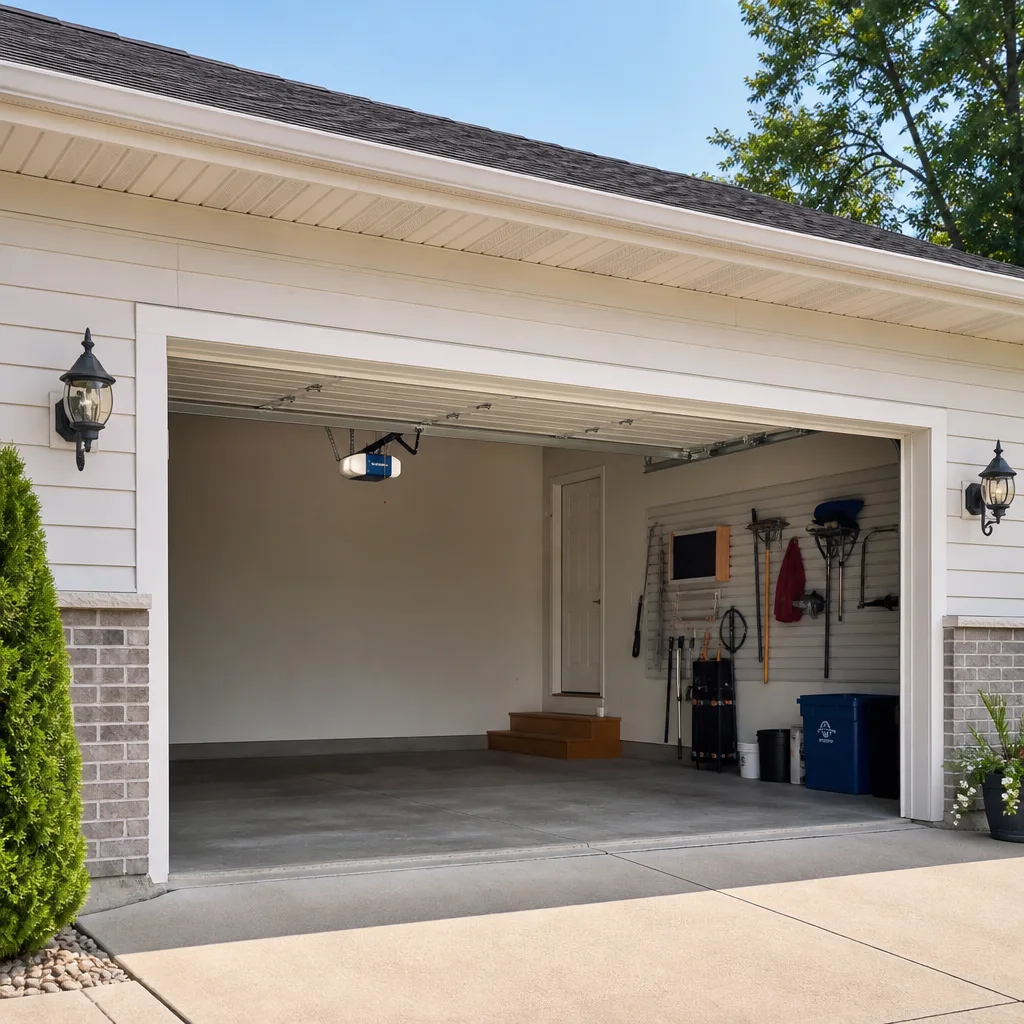
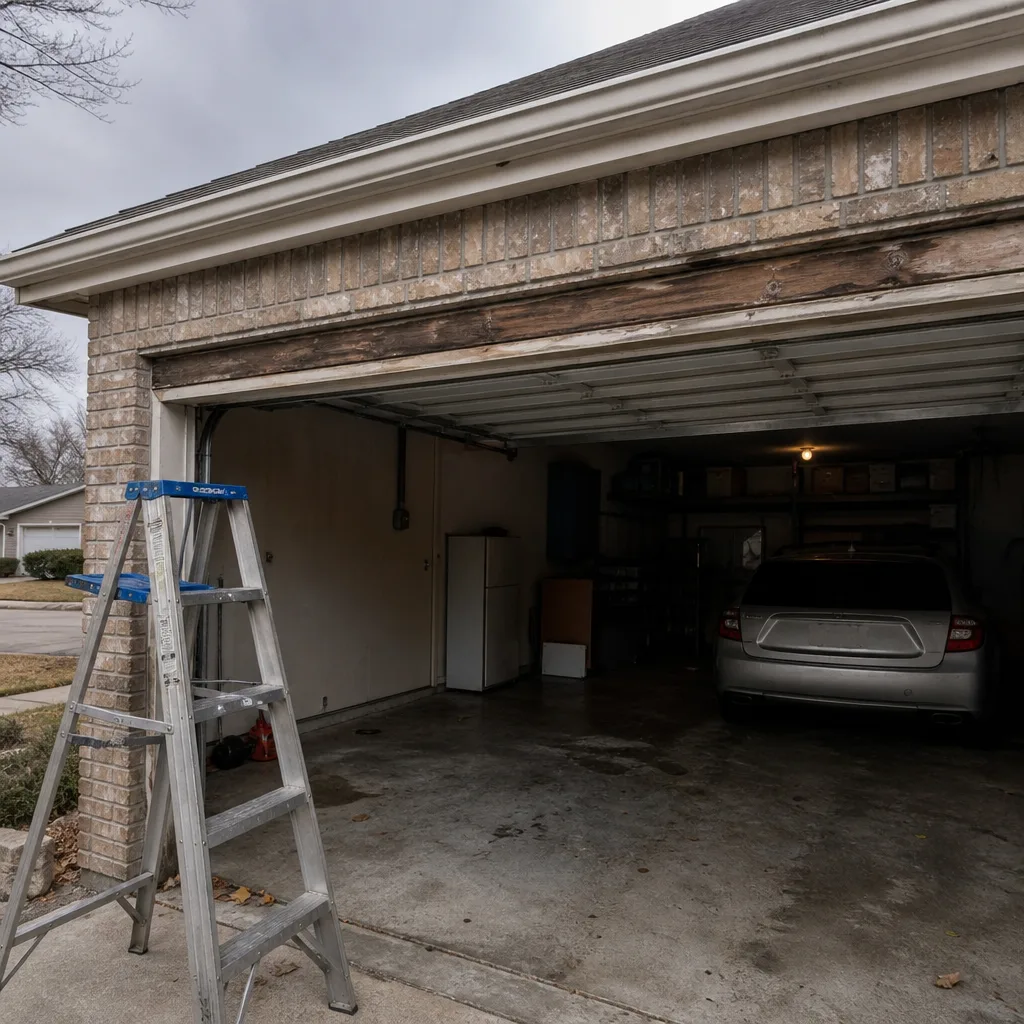 Before
 After
After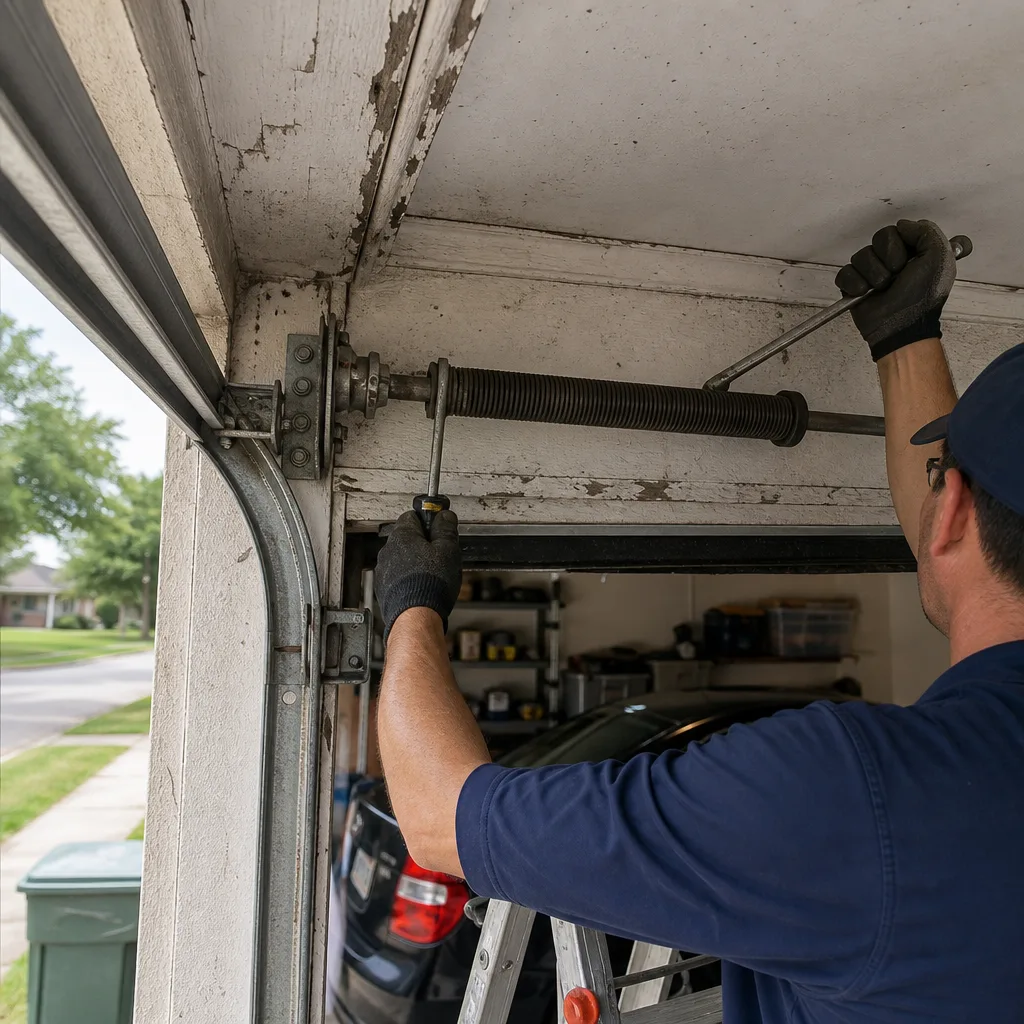 Before
 After
After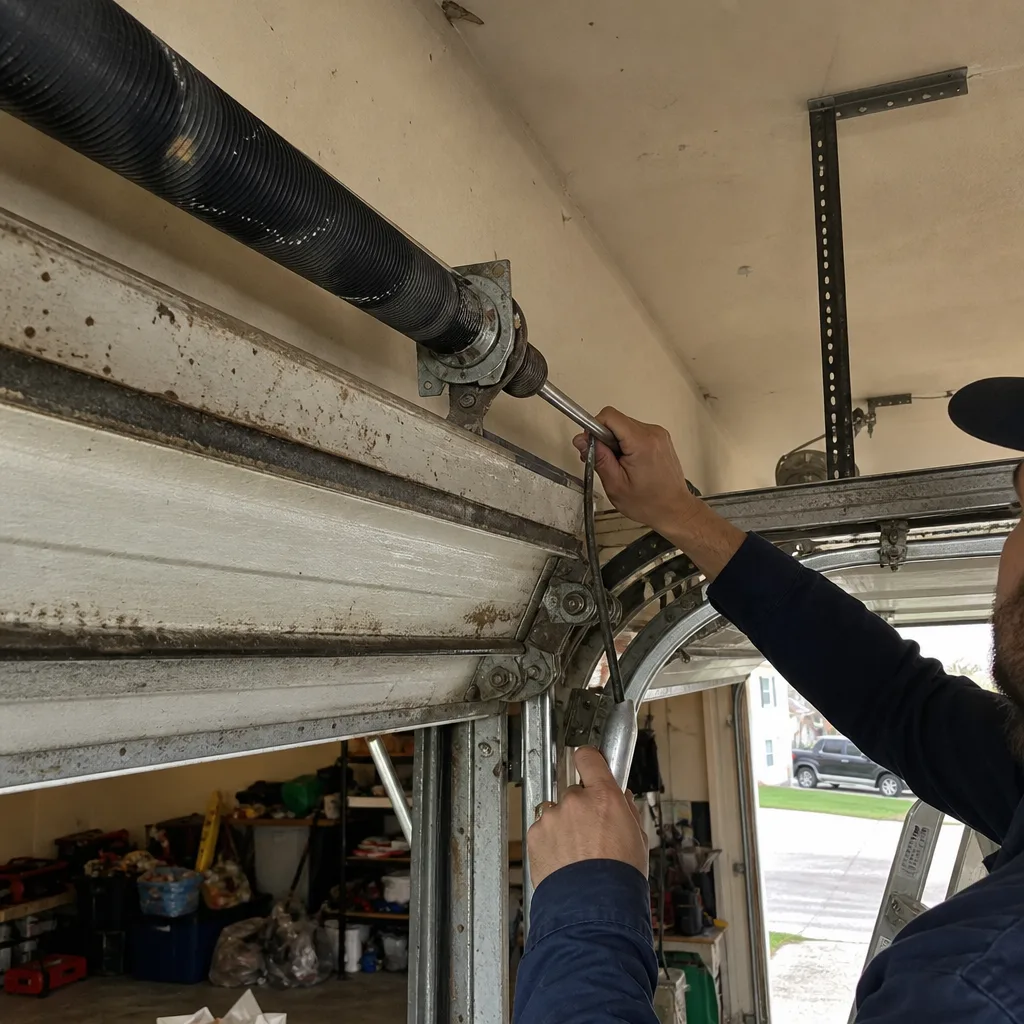 Before
 After
AfterThe Complete Guide to Garage Door in Arlington
The average Arlington garage door opens and closes 1,500 times a year - more than your front door, your dishwasher, and your HVAC system combined. Most homeowners learn nothing about it until it stops. That is an expensive way to discover that a garage door is not a simple appliance; it is a mechanical system under constant stress from Texas heat cycles, high humidity, and clay-heavy soil that shifts beneath concrete slabs. In this guide, we will walk through every decision that matters for Arlington homeowners: material selection, spring systems, insulation, maintenance, and how to read a quote so you know what you are actually buying.
Quick Answer
A well-chosen garage door in Arlington should be a steel or composite door with a minimum R-value of 12, a torsion spring system, and hardware rated for at least 10,000 cycles. Expect to pay $1,200-$3,800 for a complete replacement including installation, or $180-$340 for most common repairs. The door should be inspected annually because North Texas climate and soil conditions accelerate wear on tracks, springs, and weatherseal.
Table of Contents
- How Arlington’s Climate and Soil Affect Your Garage Door
- Choosing Door Materials That Last in North Texas
- Torsion vs. Extension Springs: What Arlington Homes Need
- What a Complete Garage Door System Includes
- Insulation, R-Value, and Energy Costs in Arlington
- A Practical Maintenance Schedule for Local Conditions
- How to Read a Garage Door Quote in Arlington
- Garage Door Openers: What to Know Before You Buy
How Arlington’s Climate and Soil Affect Your Garage Door
Arlington sits on the Blackland Prairie, with clay-heavy soil that expands when wet and contracts during dry spells. That movement does not stay underground. It transfers through your garage slab to the door frame, gradually throwing tracks and jambs out of plumb. We see this in neighborhoods across the city, from established areas near Pantego and Dalworthington Gardens to newer construction in southwest Arlington. A door that ran smooth for years starts binding, gaps appear at the bottom seal, and the opener strains.
The temperature swing is equally hard on components. Summer days in Arlington routinely hit 100°F, and metal components expand. Come winter, the occasional ice storm drops temperatures below freezing fast. That thermal cycling fatigues springs, warps weatherstrip, and degrades lubricant. Humidity stays high through spring and fall, promoting rust on unprotected hardware.
Here is what this means in practical terms:
- Tracks should be inspected for plumb at least annually; even a quarter-inch shift can cause binding
- Spring cycles should be rated for 10,000 minimum, not the 5,000-cycle economy springs some installers use
- Hardware should be galvanized or zinc-coated, not bare steel
- Weatherseal should be vinyl or rubber rated for UV exposure, not the cheap foam that crumbles in two years
In our experience, Arlington homeowners who address slab movement early - shimming frames, adjusting track brackets, replacing worn rollers - avoid the cost of full track replacement or panel damage later. The door is a system, and the foundation it mounts to is part of that system.
Choosing Door Materials That Last in North Texas
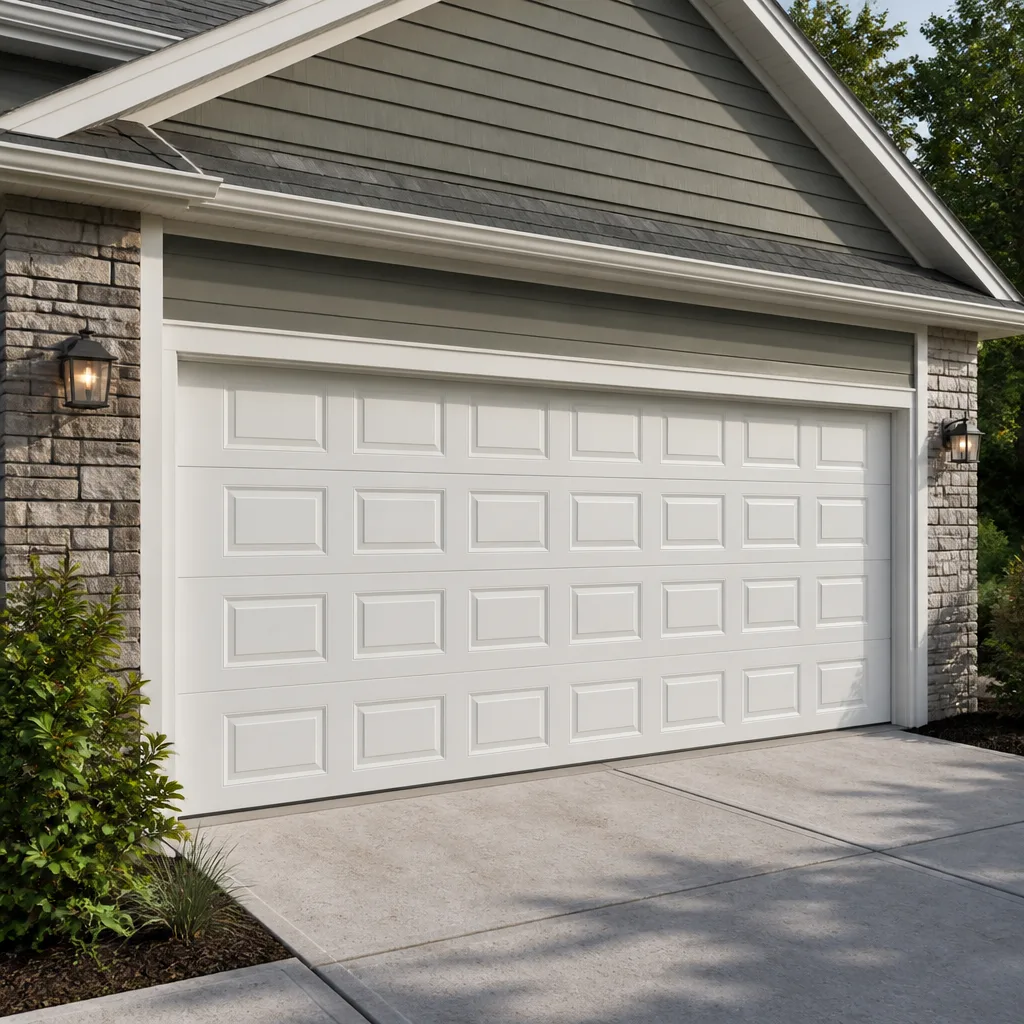
Steel dominates the Arlington market for good reason. It handles thermal expansion better than wood, resists denting from basketballs and hail, and holds paint or factory finish through intense UV exposure. But not all steel doors are equal.
Gauge matters. A 24-gauge steel door is the minimum we install in Arlington. The lower the gauge number, the thicker the steel. Economy doors at 27 or 28 gauge dent easily and transmit noise. A 24-gauge single-layer door runs $800-$1,200 installed. A 24-gauge double-layer door with polyurethane insulation runs $1,400-$2,200. Triple-layer doors with thick insulation and a steel backer run $2,000-$3,200.
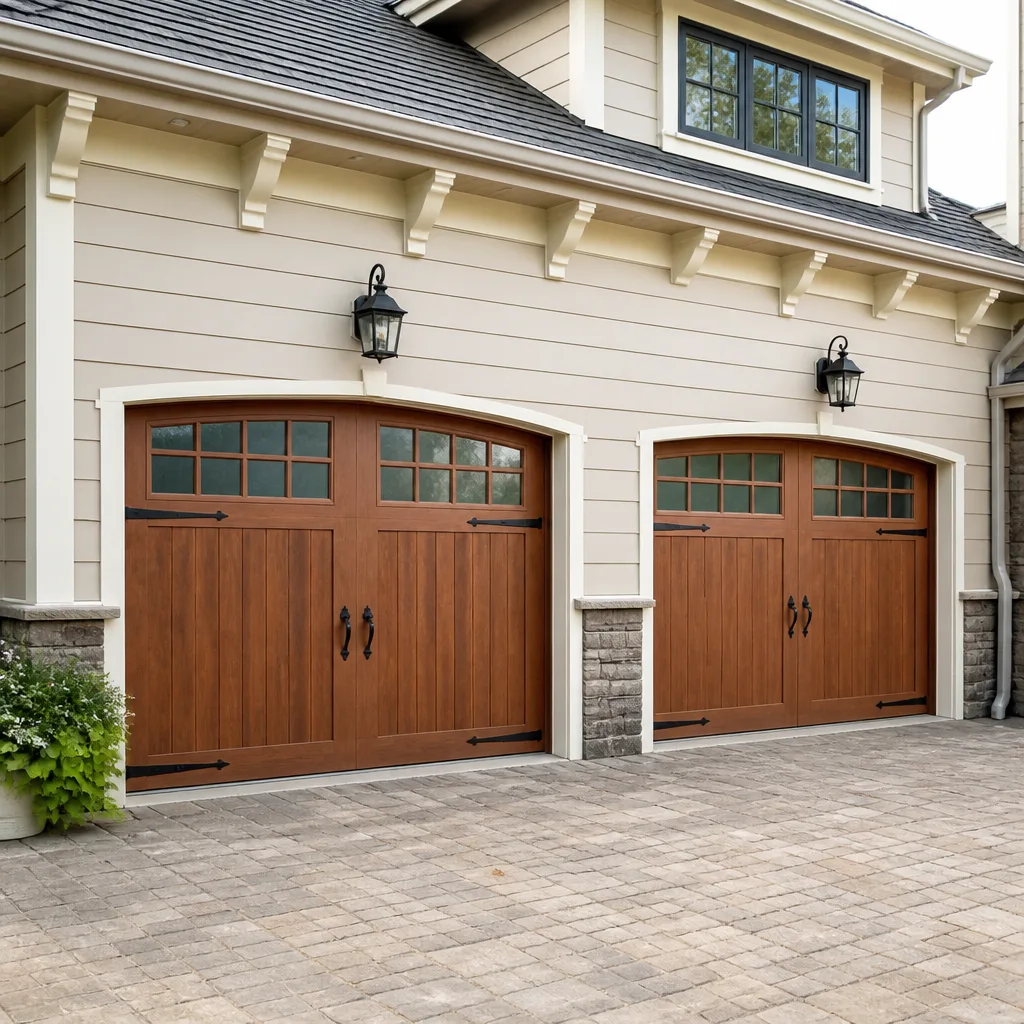
Wood composite offers the look of traditional carriage-house doors without the maintenance burden of real wood. Brands like Clopay and Amarr manufacture composite doors with insulated cores that perform well in Arlington’s humidity. They do not swell, rot, or require restaining every two years. Expect $2,800-$4,500 for a quality composite installation.
Full wood doors still have their place on historic homes in Arlington Heights or custom builds, but they demand commitment. Annual sanding and refinishing is not optional in this climate. We steer most homeowners toward steel or composite unless aesthetics override maintenance concerns.
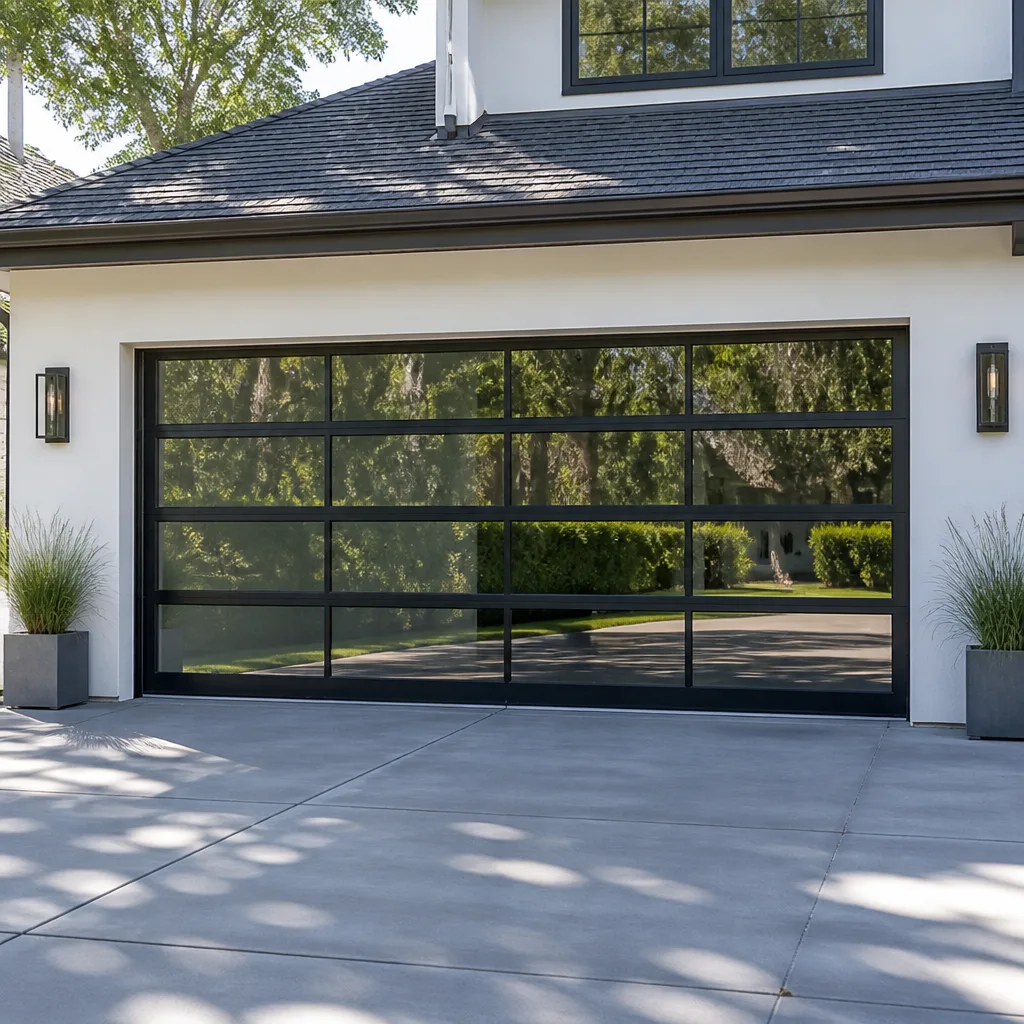
Aluminum and glass doors are gaining traction in modern Arlington homes, particularly in Viridian and other contemporary developments. They are lightweight and corrosion-resistant but poor insulators. We recommend them only for detached garages or spaces where thermal performance is not a priority.
| Material | Best For | Installed Range | Lifespan in Arlington |
|---|---|---|---|
| 24-gauge steel, double-layer | Most homes; best value | $1,400-$2,200 | 20-25 years |
| 24-gauge steel, triple-layer | Attached garages; noise reduction | $2,000-$3,200 | 25-30 years |
| Wood composite | Carriage-house look; low maintenance | $2,800-$4,500 | 20-25 years |
| Full wood | Historic homes; custom architecture | $3,500-$6,000+ | 15-20 years with care |
| Aluminum/glass | Modern aesthetics; detached garages | $2,500-$4,000 | 15-20 years |
Torsion vs. Extension Springs: What Arlington Homes Need
There are two ways to counterbalance a garage door: torsion springs mounted above the door, or extension springs running parallel to the horizontal tracks. The difference is not academic. It affects safety, longevity, and how smoothly your door operates.
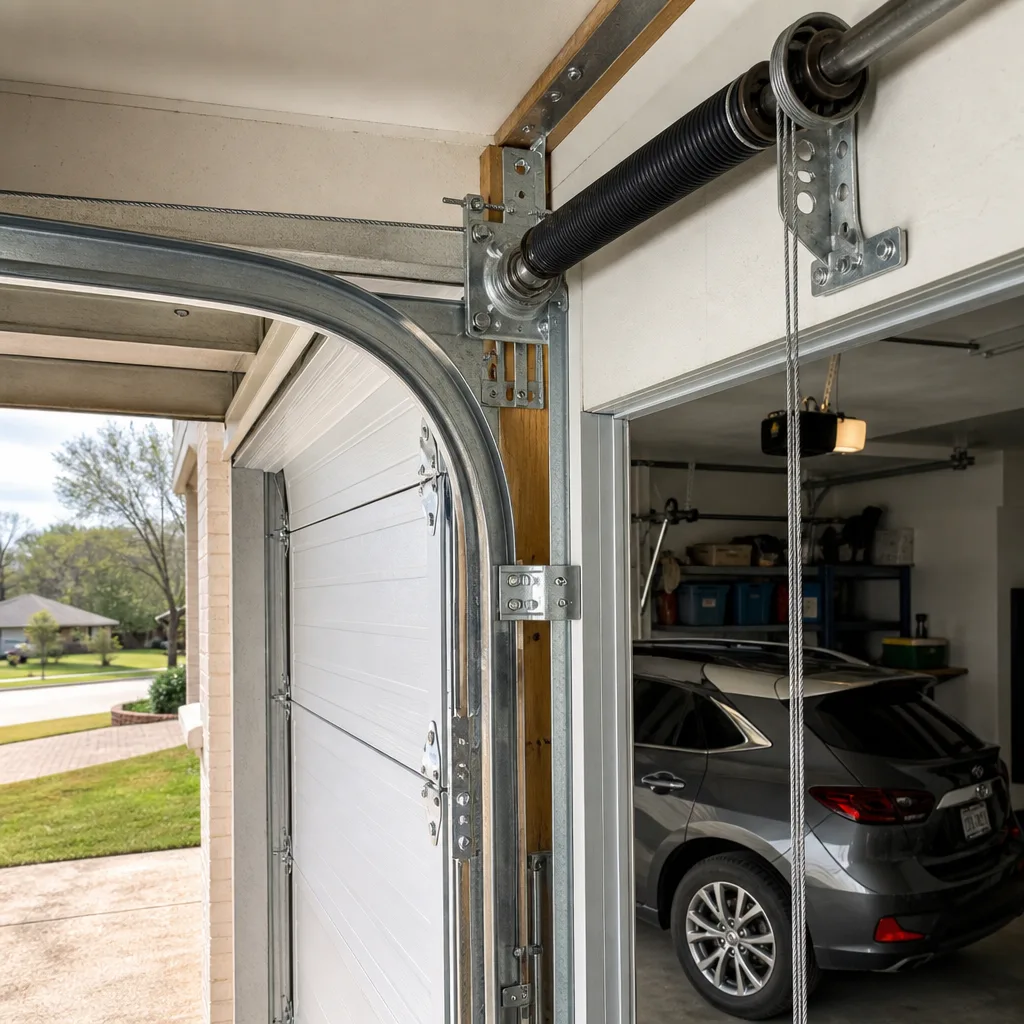
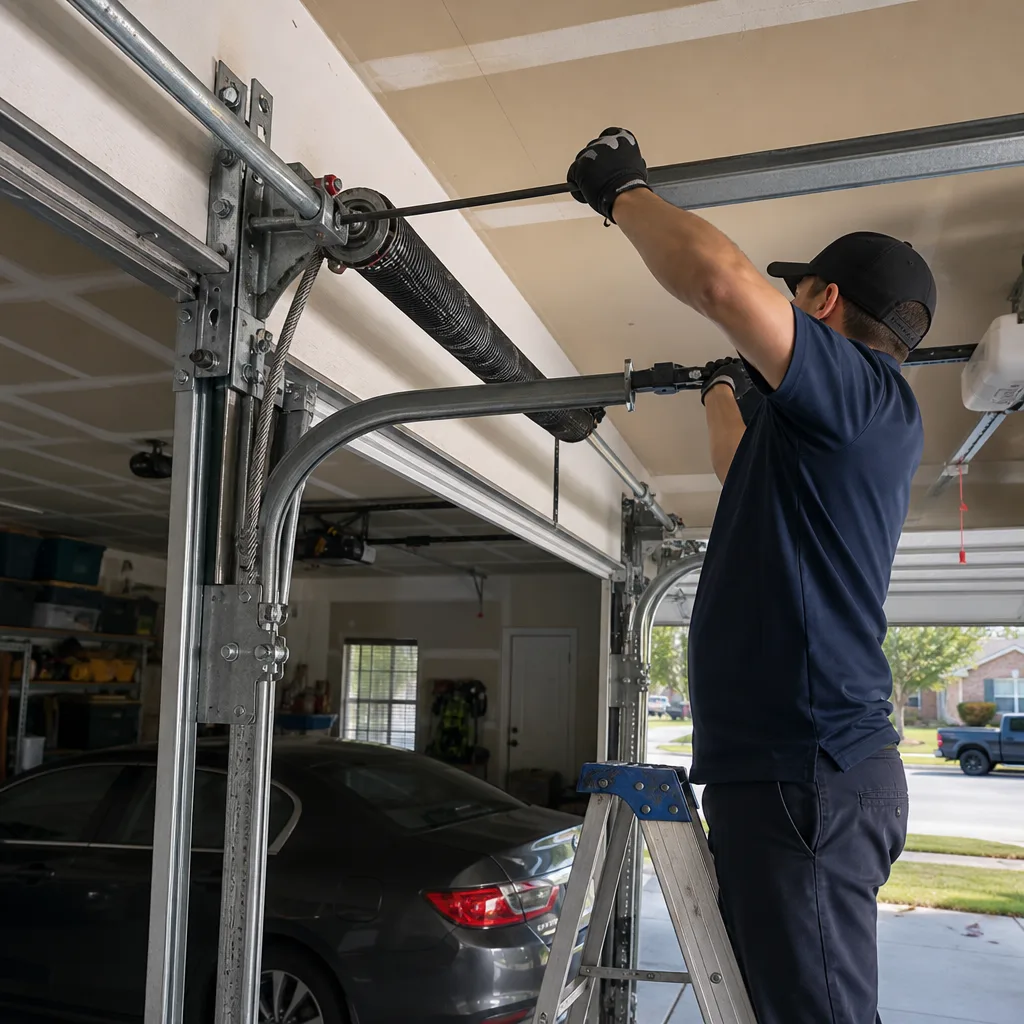
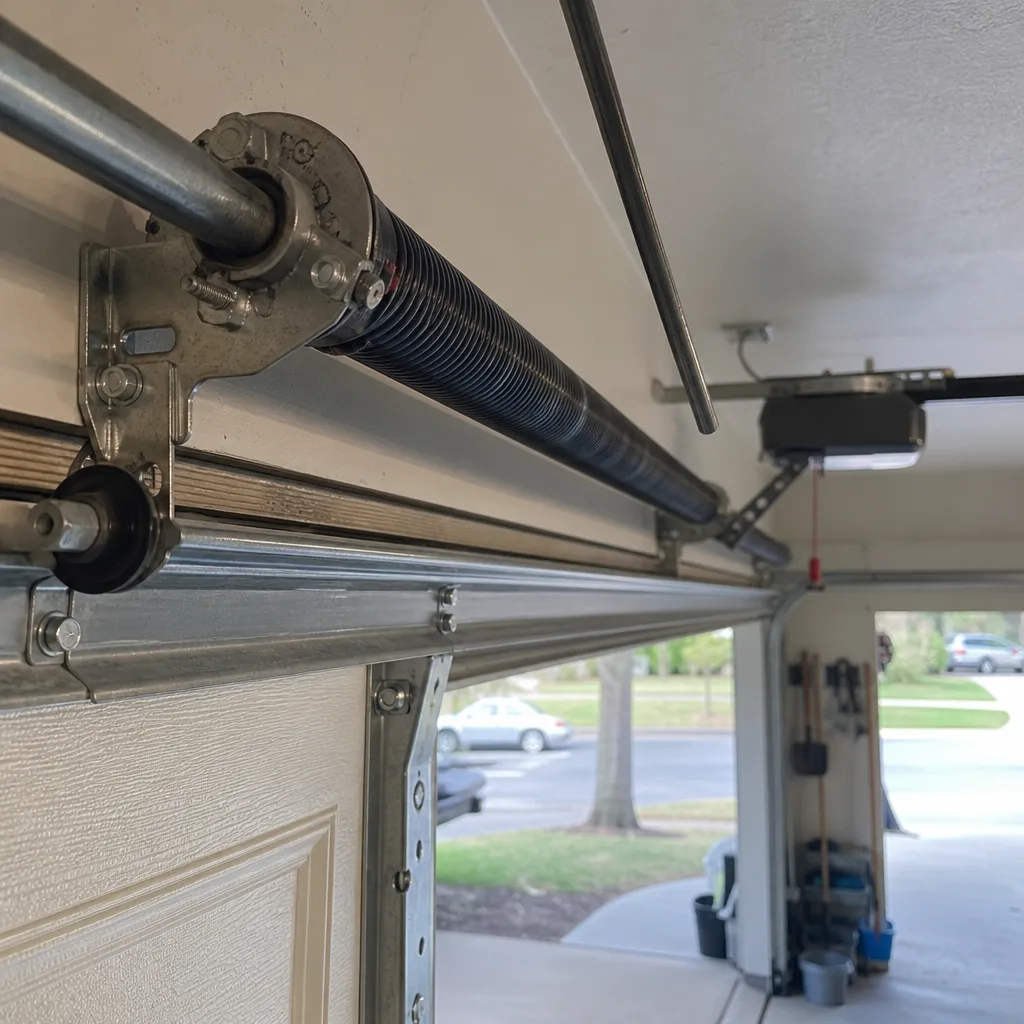
Torsion springs are the standard we recommend for nearly every Arlington home. A single torsion spring (or a pair, on heavier doors) sits on a steel shaft above the door opening. When the door closes, the spring winds tight, storing energy. When it opens, the spring unwinds, lifting the door. The spring does the work; the opener merely guides.
Torsion springs last longer - typically 10,000-15,000 cycles versus 5,000-8,000 for extension springs. They provide smoother operation because lift force distributes evenly across the door. They are also safer: when a torsion spring breaks, it stays on the shaft. An extension spring can fly loose with violent force.
Extension springs are cheaper to install and still common on builder-grade homes in Arlington, especially in subdivisions built during the 1990s and 2000s. They stretch and contract as the door moves, with pulleys and cables transferring force. The problem is uneven wear: one spring fatigues faster than the other, the door goes crooked, and the opener works harder. We replace extension systems with torsion on most replacement jobs we do in Arlington.
Safety note: Garage door springs are under extreme tension. A standard torsion spring on a double-wide door stores enough energy to cause serious injury or death if released improperly. We do not recommend homeowners attempt spring replacement. Our technicians carry the winding bars, vise grips, and knowledge to handle this safely. The repair is not worth a trip to the emergency room.
What a Complete Garage Door System Includes
Homeowners often ask us to quote “a new garage door” when they need a system. Understanding the components helps you compare apples to apples and spot quotes that leave out critical parts.
- Door panels - The visible sections. Steel, composite, wood, or aluminum. Panel thickness, gauge, and insulation determine price and performance.
- Springs - Torsion or extension, sized to the door weight. The spring is the heart of the system; it does the lifting.
- Cables - Galvanized aircraft-grade steel, running from the bottom brackets to the drum (torsion) or pulley (extension). Frayed cables are a failure point we check on every service call.
- Tracks - Vertical and horizontal steel guides. Must be plumb and level; even minor misalignment causes binding and premature opener failure.
- Rollers - Steel or nylon wheels riding in the tracks. Nylon rollers with sealed bearings run quieter and last longer; we use them on most Arlington installations.
- Hinges and hardware - Connect panels, attach rollers, and anchor the door to the frame. Should be galvanized or zinc-plated.
- Opener - The motorized unit that automates movement. Separate from the door itself but integral to daily function. See our opener guide for details.
- Weatherseal - Bottom seal, side seals, and top seal. Critical for keeping dust, pollen, and water out of Arlington garages during spring storms.
A “door only” quote that omits springs, tracks, or opener is not a complete replacement. It is a partial job that leaves you coordinating multiple contractors. When we quote installation in Arlington, we specify every component, its brand or grade, and the warranty. No surprises on the bill.
Insulation, R-Value, and Energy Costs in Arlington
Arlington garages share at least one wall with conditioned living space on most homes. An uninsulated garage door acts like a radiator in summer and a refrigerator in summer, forcing your HVAC system to compensate. The difference between an uninsulated door and a well-insulated one can be $15-$30 monthly on summer electric bills in a typical Arlington home.
R-value measures thermal resistance. For Arlington’s climate, we recommend a minimum R-value of 12 for attached garages. An R-value of 16-18 is better if the garage doubles as workshop or living space. Here is how construction affects performance:
- Single-layer steel (no insulation): R-value near 0. Suitable only for detached garages in mild use.
- Double-layer steel (steel + insulation): R-value 6-10. Better than nothing, but below our Arlington minimum for attached garages.
- Triple-layer steel (steel + insulation + steel backer): R-value 12-18. Our standard recommendation.
- Polyurethane vs. polystyrene: Polyurethane foam bonds to the steel skins, adding structural rigidity and achieving higher R-value in thinner profiles. Polystyrene is cheaper but less effective and more prone to settling.
Insulation also affects noise. A triple-layer door with polyurethane runs noticeably quieter than a single-layer door rattling in the wind. In neighborhoods like Mainspring Garage Door Co. home territory across Arlington, where homes sit close together, that matters for neighbor relations as much as energy bills.
A Practical Maintenance Schedule for Local Conditions
Arlington’s combination of heat, humidity, and soil movement demands more frequent attention than manufacturer guidelines written for moderate climates suggest. Here is the schedule we recommend based on what we have seen in 42 years of local service.
Every three months:
- Visually inspect springs for gaps in the coils (sign of fatigue)
- Check cables for fraying or rust
- Test the auto-reverse: place a 2×4 flat on the floor; the door should reverse on contact
- Listen for grinding, squealing, or irregular noises during operation
Every six months:
- Lubricate rollers, hinges, and torsion spring with silicone-based spray (not WD-40, which attracts dust)
- Inspect weatherseal for cracking or hardening; replace if light shows through gaps
- Tighten track bolts and lag screws (soil movement loosens them over time)
- Check door balance: disconnect opener and lift manually; door should stay at mid-height
Annually:
- Professional inspection including track plumb, spring cycle count, opener force settings, and safety sensor alignment
- Consider our $89 Seasonal Tune-Up - we handle the full checklist and spot problems before they strand you
In the Interlochen area and other mature Arlington neighborhoods with mature trees, we also recommend clearing leaves and debris from the door bottom and track area quarterly. Decaying organic matter holds moisture against steel components and accelerates corrosion.
How to Read a Garage Door Quote in Arlington
Not every quote with the same bottom line covers the same work. We have reviewed competitor quotes for Arlington homeowners who thought they were comparing identical jobs. Here is how to read what you are actually being sold.
Check the spring specification. A quote should state spring type (torsion or extension), wire size, inside diameter, and cycle rating. “New torsion springs” is not enough. “Two 0.250 x 2.00 x 32″ torsion springs, 10,000-cycle rated” tells you what you are getting.
Verify track inclusion. Some quotes price the door and opener but reuse old tracks. On an Arlington home with slab movement, old tracks may be out of plumb. New door on bent tracks will never run right.
Confirm opener specs. Horsepower, drive type (belt, chain, screw), and features (battery backup, Wi-Fi, safety sensors) should be listed. A “1/2 HP opener” quote without brand or model is impossible to evaluate.
Ask about removal and disposal. Hauling away the old door is not automatic. We include it; some competitors charge $150-$300 extra.
Understand the warranty structure. Our 90-Day Done Right Promise covers labor and workmanship. Manufacturer warranties cover defects in the door or opener itself. A quote should specify both. A “lifetime warranty” on springs sounds generous until you read that it covers factory defects only, not normal wear.
Demand upfront pricing. The flat price should be stated before any work begins. If a contractor says “we will see when we get there,” that is not a quote. It is an estimate that will grow. We quote the full price, you agree, then we start. No surprises on the bill.
Garage Door Openers: What to Know Before You Buy
The opener is often an afterthought in a door replacement, but it determines daily convenience and long-term reliability. For Arlington homeowners, we recommend focusing on three factors: drive type, horsepower, and smart features.
Drive type:
- Belt drive - Quietest option. Best for attached garages under bedrooms or living spaces. Slightly higher cost, longer belt life in Arlington’s climate.
- Chain drive - Most economical. Reliable but noisy. Suitable for detached garages or where noise is not a concern.
- Screw drive - Fewer moving parts, but plastic components can fatigue in extreme heat. We rarely recommend for Arlington.
- Direct drive - Motor travels along the rail; extremely quiet and durable. Premium price point.
Horsepower: A 1/2 HP opener handles most single steel doors. Double-wide or solid wood doors need 3/4 HP. Oversizing does not hurt; undersizing strains the motor and shortens life.
Smart features: Wi-Fi connectivity, battery backup, and camera integration are increasingly standard. We are factory-familiar with Genie, Wayne Dalton, and other major brands, and can recommend models that integrate with your existing home systems.
Opener installation in Arlington typically runs $400-$800 depending on features, not including the door itself. We carry LiftMaster, Chamberlain, and Genie units on our trucks for same-day replacement when possible.
Common Mistakes to Avoid
- Ignoring the first signs of spring fatigue. A door that feels heavy, opens unevenly, or makes new noises is telling you the springs are failing. Waiting until they break often damages cables, panels, or the opener. In Arlington’s heat, springs fatigue faster than national averages suggest.
- Choosing the lowest bid without comparing scope. A $950 quote that reuses old tracks and installs 5,000-cycle springs is not cheaper than a $1,400 quote with new tracks and 10,000-cycle springs over the life of the door.
- Neglecting slab movement. Arlington’s clay soil shifts. A door that ran fine for years starts binding because the frame settled. Adjusting the door without addressing the frame is a temporary fix at best.
- DIY spring replacement. We have been called to homes where a homeowner’s spring winding bar slipped, damaging the door, the wall, and nearly the homeowner. This is not a YouTube project.
- Using the wrong lubricant. WD-40 is a solvent, not a lubricant. It strips existing grease and attracts dust that grinds rollers and hinges. Silicone-based garage door lubricant is the correct product.
- Skipping the auto-reverse test. Federal law requires this safety feature, but it fails silently. A malfunctioning auto-reverse can crush a pet or child. Test it monthly.
When to Call a Professional
Call when the door makes new noises, moves unevenly, reverses unexpectedly, or fails to open. Call if you see frayed cables, gaps in spring coils, or bent tracks. Call if the opener strains, hums without lifting, or if safety sensors are misaligned. These are not problems that resolve themselves; they are warnings of imminent failure.
For installation, replacement, or any repair involving springs or cables, professional service is the safe choice. Mainspring Garage Door Co. offers free estimates in Arlington - call (817) 241-8437. We arrive with the right parts on the truck, state the flat price before any work begins, and back every job with our 90-Day Done Right Promise in writing.
Frequently Asked Questions
A complete garage door replacement in Arlington typically costs $1,200-$3,800 installed, depending on door size, material, insulation level, and whether the opener is included. Steel double-layer doors with standard hardware fall at the lower end; composite carriage-house styles or triple-layer insulated doors with smart openers fall at the higher end. We provide written, itemized quotes with no obligation - call (817) 241-8437 for an exact figure on your specific door.
Standard 10,000-cycle torsion springs last 7-12 years in Arlington, shorter than national averages due to heat cycling and humidity. Extension springs typically fail in 4-7 years. We recommend 15,000-cycle springs for heavy-use doors or homeowners planning long-term residence. Our $89 Seasonal Tune-Up includes spring condition assessment.
Yes. Opener replacement is independent of door replacement if the door itself is in good condition. We evaluate door balance, track condition, and spring health before recommending opener-only replacement to ensure the new opener is not overloaded by existing problems. Most Arlington opener replacements are completed in a single visit.
Track misalignment from slab movement is the leading cause in Arlington. Clay soil expansion and contraction gradually shift garage foundations. Impact damage from vehicles, worn rollers, or loose track hardware are other common causes. Repeated derailment indicates a systemic problem requiring professional track realignment or frame shimming, not just popping the door back on.
24-gauge steel with polyurethane insulation performs best for most Arlington homes. It withstands hail, resists thermal expansion better than aluminum, and requires minimal maintenance compared to wood. Composite doors are excellent for homeowners wanting traditional aesthetics without the upkeep burden. Full wood demands annual refinishing in this climate.
We offer same-day and emergency response for repairs, with phones answered by a live person 24/7 including nights, weekends, and holidays. Most common repairs - spring replacement, cable repair, roller replacement, opener troubleshooting - are completed in a single visit because our trucks carry the necessary parts. Installation and scheduled replacement work is measured, ordered, and booked at your convenience with a firm date.
The Bottom Line
A garage door in Arlington is a mechanical system under unique stress: thermal cycling, humidity, and soil movement all accelerate wear. The right door is steel or composite with adequate insulation, torsion springs rated for real use, and hardware that resists corrosion. The right maintenance catches slab movement and spring fatigue before they cause cascade failures. The right quote specifies every component so you know what you are buying. Treat the door as the system it is, and it will serve you quietly for decades. Neglect it, and you will learn more about garage doors than you ever wanted to, usually at inconvenient hours.
Written by Carl Dutton, Owner at Mainspring Garage Door Co., serving Arlington since 2016.