
Last updated September 10, 2026
Full 25-point door and opener safety check with every visit - springs, cables, rollers, tracks, and your LiftMaster or Chamberlain opener included
You get a price before we start. It does not change when the truck arrives.
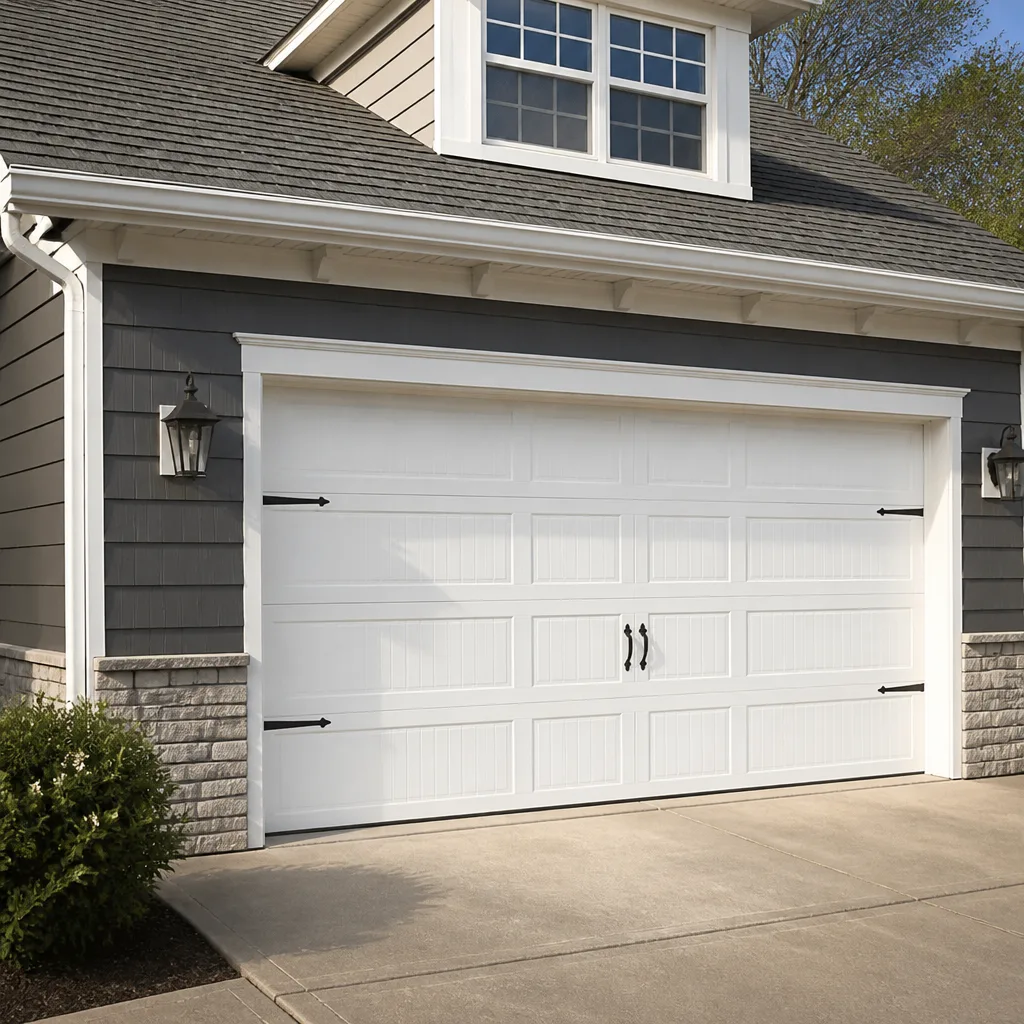
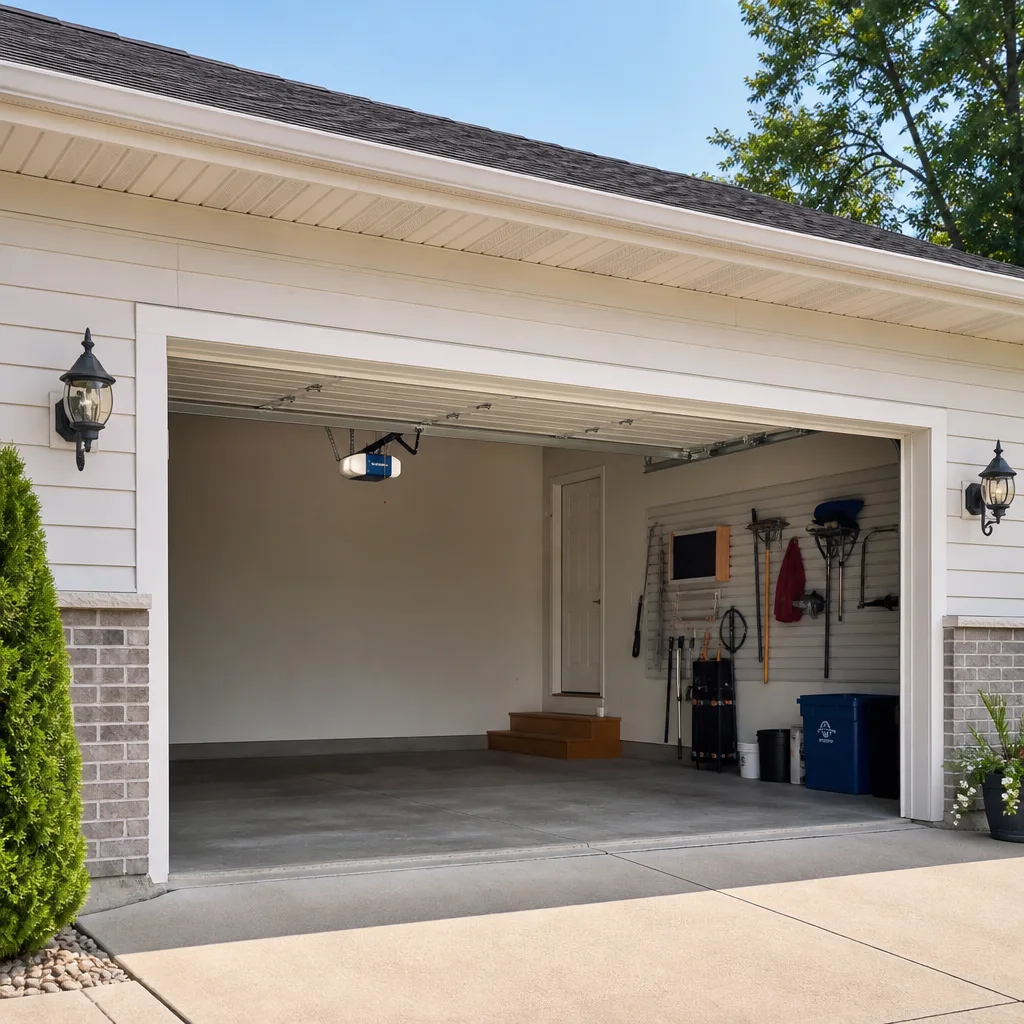
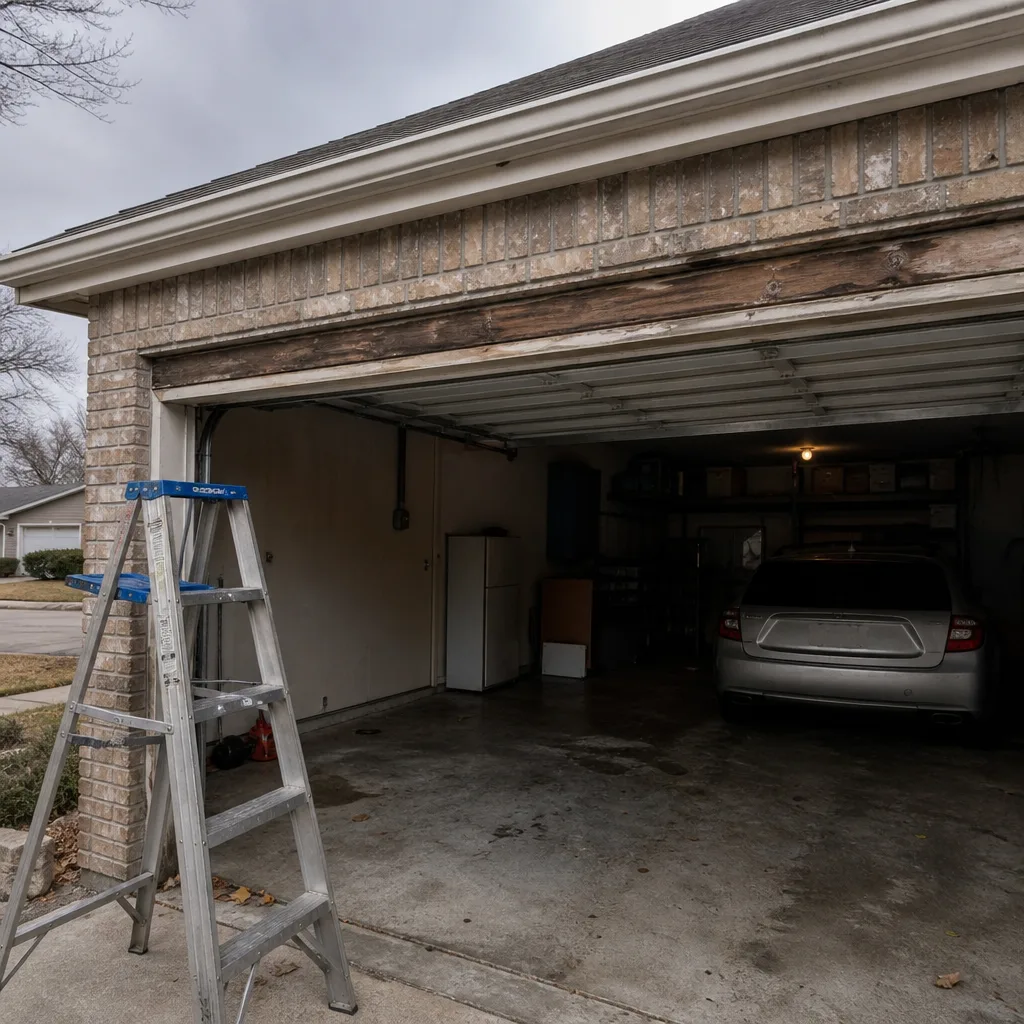 Before
 After
After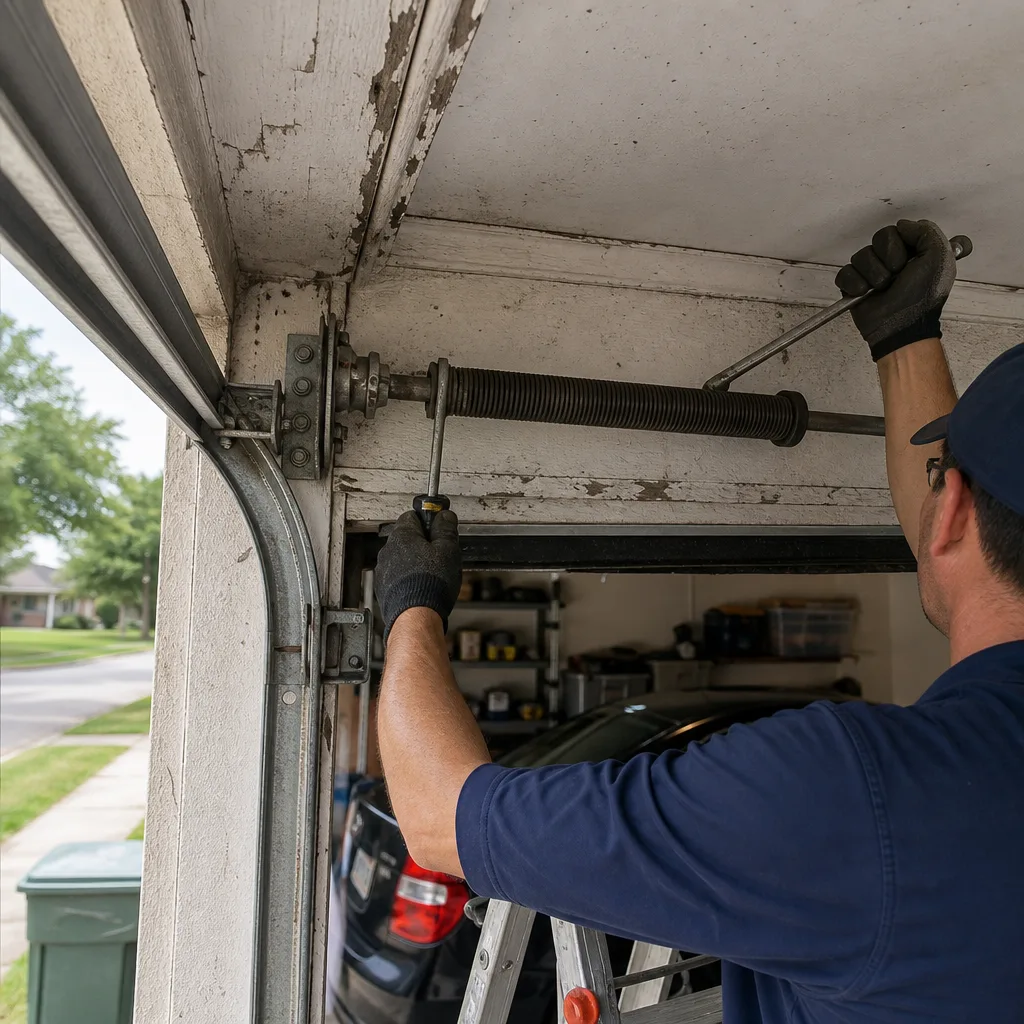 Before
 After
After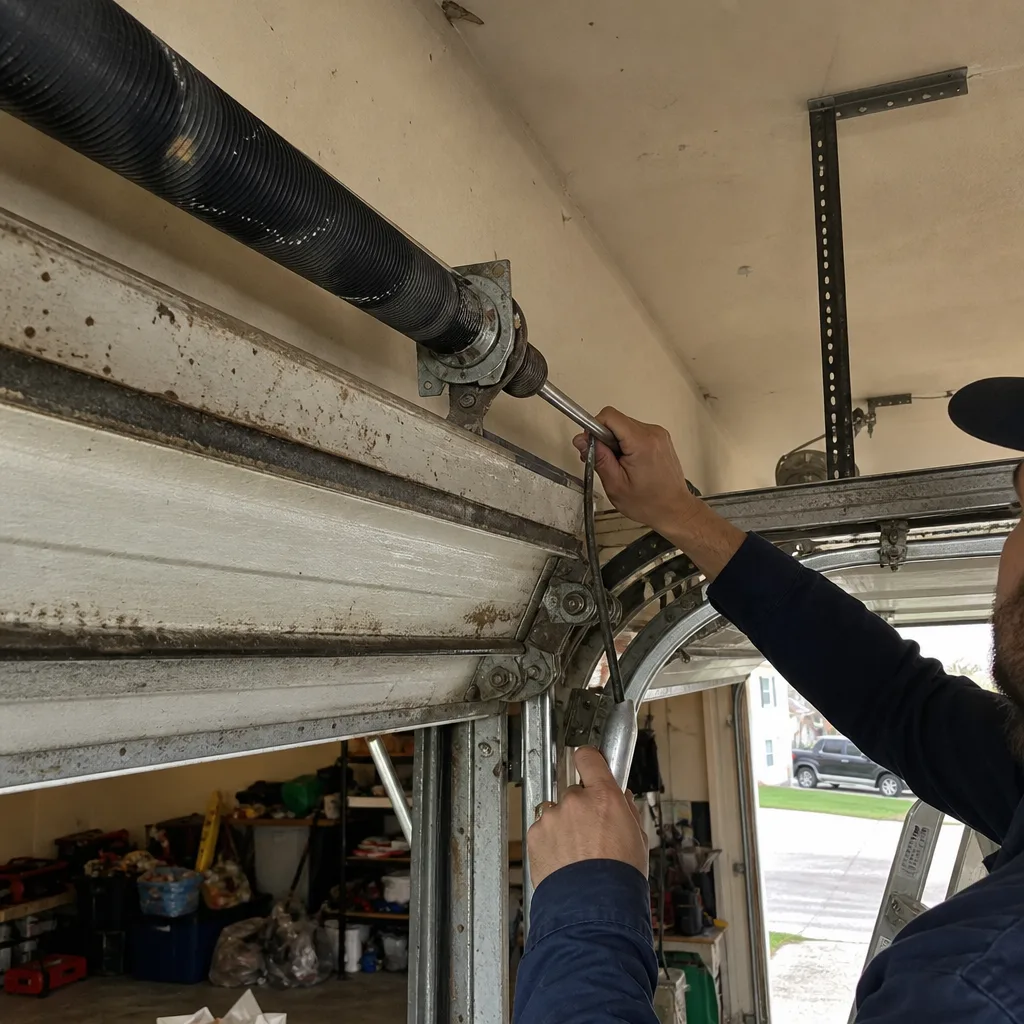 Before
 After
AfterDIY vs Professional Garage Door: The Arlington Homeowner’s Decision Guide
Replacing a garage door opener is a reasonable Saturday afternoon project. Adjusting a torsion spring is a task that sends roughly 20,000 Americans to emergency rooms annually. The distinction between those two jobs is the only thing that matters in this decision.
Arlington homeowners face this crossroads every year. The Texas heat warps weatherseal, summer storms throw debris into tracks, and after twenty years in the same house, something finally gives. Some fixes are genuinely within reach of a patient homeowner with basic tools. Others carry enough force to break bones or worse. This guide draws that line precisely, without inflating the danger of easy tasks or minimizing the real hazard of torsion springs, and points you to our garage door repair maintenance checklist for Arlington homeowners for routine upkeep. You’ll know exactly what you can handle, what requires a trained technician, and how to tell the difference before you open your toolbox.
Quick Answer
Homeowners in Arlington can safely handle opener replacement, weatherseal installation, roller swaps on extension-spring doors, and keypad programming. Any work involving torsion springs, cables, header brackets, or structural frame changes should be performed by a licensed technician. The dividing line is stored mechanical energy, not skill level.
Table of Contents
- Homeowner-Safe Tasks: What You Can Actually Do Yourself
- Professional-Only Tasks: Where DIY Becomes Dangerous
- The Real Cost of DIY Error: Beyond the Repair Bill
- Tools and Time Realities: What the Project Actually Demands
- How to Spot a Bad YouTube Tutorial
- How Arlington Climate and Code Affect Your Decision
- When to Call a Professional
- Frequently Asked Questions
Homeowner-Safe Tasks: What You Can Actually Do Yourself
These four jobs are genuinely appropriate for a careful homeowner. They involve minimal stored energy, standard household tools, and clear manufacturer instructions. We’ve completed thousands of service calls in Arlington, and these are the ones where we often tell the caller, “You can probably handle that yourself.”
1. Garage Door Opener Replacement
A new opener is the most common DIY success we see. Modern units from Chamberlain, LiftMaster, and Genie include rail sections that click together, mounting brackets with lag bolts, and straightforward wire terminals. The door itself stays on its springs throughout; you’re only swapping the motorized carriage.
Realistic requirements:
- Time: 3-5 hours for a first-timer, including removal of the old unit
- Tools: Cordless drill, stepladder, socket set, wire strippers, stud finder
- Cost: $200-$450 for the opener unit, plus $30-$50 for mounting hardware if not included
The critical step most people miss: measuring the header clearance. Arlington homes built in the 1970s and 1980s, common in neighborhoods like Pantego and Dalworthington Gardens, often have low ceilings or obstructed headers. A standard rail assembly needs roughly 2 inches of clearance above the fully open door. Check this before you buy.
Programming remotes and keypad entry is straightforward with current models. The garage door opener in Arlington market has shifted heavily toward WiFi-enabled units, which add app setup but reduce wiring complexity.
2. Bottom Weatherseal Replacement
The rubber or vinyl strip across the bottom of your door hardens and cracks after 3-5 years of Texas sun. Replacement is simple: slide the old seal out of the retainer channel, measure precisely, slide the new one in. No spring tension involved. No heavy lifting.
One Arlington-specific note: our clay-heavy soils shift seasonally. In areas like Southwest Arlington and near Lake Arlington, we’ve seen door bottoms sit unevenly after foundation movement. If your seal gaps on one side, the issue may be door alignment, not the seal itself. A seal won’t fix a door that’s out of plumb.
3. Roller Replacement (Extension Spring Doors Only, Door Closed)
This is where precision matters. Extension spring doors, common on single-car garages and pre-1990 construction, have springs mounted along the horizontal tracks. With the door fully closed and the opener disconnected, these springs are at their most relaxed state. You can safely swap steel or nylon rollers by removing one hinge bolt at a time, never releasing the cable or spring.
Torsion spring doors are different. The spring sits above the door on a steel shaft, wound tight even when the door is closed. Never attempt roller replacement on a torsion system. The distinction is not subtle, and confusing the two is how injuries happen.
4. Keypad and Remote Programming
Pure electronics, zero mechanical risk. Follow the manufacturer’s learn-button sequence. If you’re pairing a new remote to an older unit, the frequency match matters. We’ve fielded calls from Arlington homeowners who bought a modern remote for a 2005 Craftsman opener and couldn’t understand why it wouldn’t sync. The technology generations don’t always overlap.
Professional-Only Tasks: Where DIY Becomes Dangerous
These tasks share one characteristic: they involve components under significant stored tension or structural load. The danger is not theoretical. We’ve seen the aftermath.
Torsion Spring Adjustment or Replacement
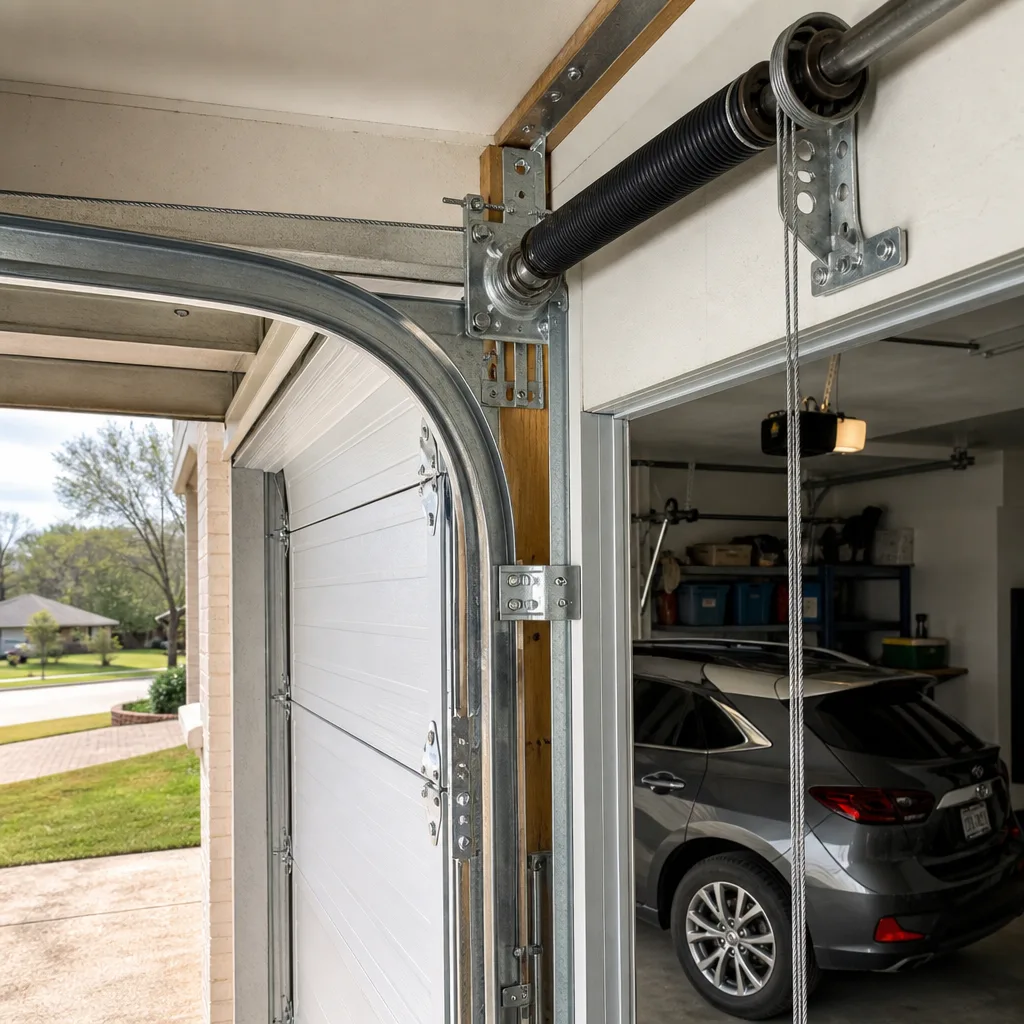
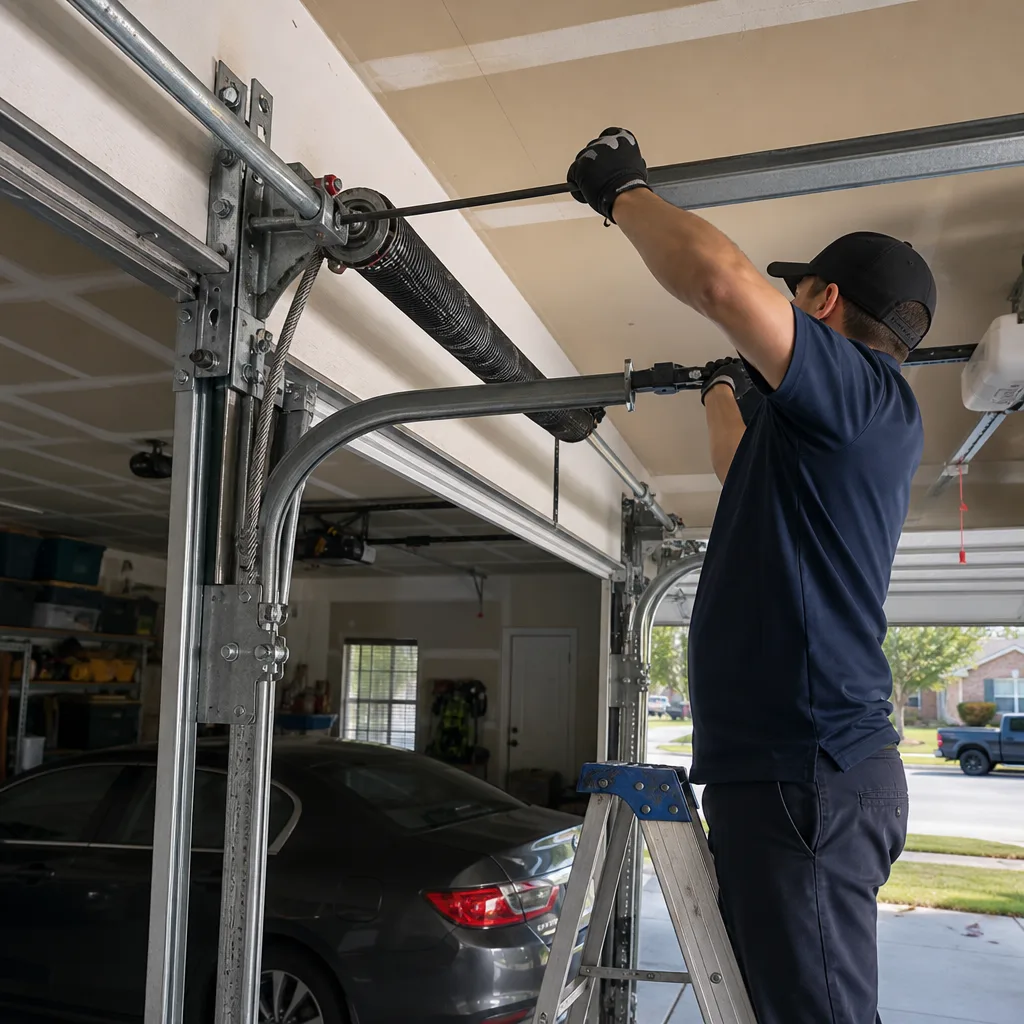
A standard 16-foot residential garage door weighs 150-250 pounds. The torsion spring, mounted on a shaft above the door, is wound to counterbalance that weight precisely. A fully wound spring stores enough energy to lift a heavy man off the ground.
Winding bars must be inserted into the cogs of the winding cone while tension is adjusted. Use the wrong tool, a worn bar, or slip your grip, and the bar becomes a projectile. The Consumer Product Safety Commission tracks these injuries. The numbers are sobering.
Arlington’s temperature swings compound the risk. A spring adjusted in mild March weather may be over- or under-wound when August heat expands the metal. Proper spring selection requires calculating cycle life based on door weight, drum size, and lift height. This is not guesswork.
Cable Replacement
Cables run from the bottom bracket to the drum, under constant tension from the torsion spring. Even with the spring unwound, the cable retains friction load and can snap unpredictably during removal. Bottom brackets on torsion systems are under vertical lift force. A slipped wrench releases that force instantly.
Header Bracket and Structural Frame Work
The header bracket anchors the opener rail to the wall above the door. In older Arlington homes, this may mean fastening into a engineered lumber header, solid timber, or in some 1960s construction, inadequate framing that requires sistering or reinforcement. Misjudging the structural capacity can pull the bracket loose under opener load, dropping the rail onto a vehicle or person.
Track Realignment and Door Rehanging
Tracks must be plumb within 1/4 inch over the full height, parallel to each other within 1/2 inch, and properly spaced to the door’s exact width. A door hung even slightly crooked will bind, twist, and eventually fail. The adjustment involves loosening multiple brackets while the door’s weight hangs partially supported. One slipped support and the door drops.
The Real Cost of DIY Error: Beyond the Repair Bill
The immediate cost of a botched repair is easy to calculate-see our Garage Door Cost Breakdown: The Arlington Homeowner’s Reference for 2026 for typical numbers-and includes parts, tools, and the eventual professional call to fix what went wrong. But garage door DIY carries costs that don’t appear on a receipt.
Insurance and Liability Exposure
Homeowner’s insurance policies contain standard exclusions for injuries resulting from unlicensed work on certain home systems. Electrical and structural work are commonly flagged. Garage door torsion spring work sits in a gray zone that insurers increasingly scrutinize.
If a spring you adjusted fails and injures a family member, a visitor, or a subsequent homeowner, your policy may deny the claim based on improper maintenance. The liability exposure extends beyond your property line. A door that fails because of amateur work can damage a vehicle, injure a passerby, or collapse onto a child in the driveway.
We are not alarmists. We’ve been in this trade since 1984. But we’ve also been deposed in litigation where a homeowner’s spring adjustment was the central question. The legal costs alone exceeded any repair bill by a factor of ten.
The Hidden Cost of Delayed Proper Repair
A door that’s “almost right” after DIY work often continues to operate poorly for months. The opener strains against misaligned tracks. A partially balanced door wears cables unevenly. By the time the homeowner calls us, the simple spring replacement has become a spring, cable, drum, and opener gear repair. In Arlington’s competitive resale market, a door that groans, shudders, or reverses unpredictably is also a red flag in buyer inspections.
Warranty and Manufacturer Support
Clopay, Amarr, and Wayne Dalton each specify professional installation for full warranty coverage. A homeowner-installed spring or opener carries a parts-only warranty at best, and often no warranty at all. The labor to replace a failed part under DIY installation falls entirely on the homeowner. Over a 15-year door lifespan, that gap adds up.
Tools and Time Realities: What the Project Actually Demands
Every homeowner-safe task we listed requires specific tools and realistic time allocation. Underestimating either is where DIY goes sideways.
Opener Replacement: Tool and Time Breakdown
- Preparation (30-45 minutes): Disconnect power, remove old opener, inspect header for sound wood or adequate blocking, verify electrical outlet capacity. Older Arlington homes may have ungrounded outlets or insufficient amperage. A 3/4-horsepower opener on a 15-amp circuit with other loads will trip breakers.
- Assembly (60-90 minutes): Assemble rail sections, attach carriage, mount motor unit. Follow the manual’s torque specs for lag bolts. Over-tightening strips soft pine headers.
- Mounting and Connection (60-90 minutes): Secure header bracket, hang motor, attach rail to door bracket, wire safety sensors. Sensor alignment is the most common failure point. They must face each other within 6 inches of floor level, unobstructed, with indicator lights steady.
- Programming and Testing (30 minutes): Set travel limits, force sensitivity, remote pairing. Test auto-reverse with a 2×4 block. Federal law requires this function; a non-reversing door is a hazard and a liability.
Total realistic time: 4-6 hours. Not a quick morning project.
Weatherseal Replacement
- Time: 30-60 minutes
- Tools: Utility knife, tape measure, spray silicone lubricant for insertion
- Critical detail: Buy seal by exact retainer profile, not generic “garage door seal.” The T-end, bead-end, or bulb profiles are not interchangeable. Bring a 6-inch sample to the supplier.
Roller Replacement (Extension Spring Doors)
- Time: 45-90 minutes for full set
- Tools: Socket set or wrench set, locking pliers to secure door if needed
- Safety: Door must be fully closed, opener disconnected, one roller swapped at a time. Never remove multiple hinges simultaneously.
How to Spot a Bad YouTube Tutorial
YouTube has democratized home repair knowledge. It has also democratized dangerous misinformation. We’ve seen tutorials that would get a technician fired on the spot. Here’s how to evaluate what you’re watching.
Red Flag: No Winding Bars for Torsion Work
Any video showing torsion spring adjustment with screwdrivers, pliers, or adjustable wrenches instead of solid steel winding bars is demonstrating an unsafe shortcut. Winding bars are precisely sized solid steel, inserted fully into the cone. Anything else can slip, and the consequences are severe.
Red Flag: No Safety Cable on Extension Springs
Extension springs should always have a safety cable running through their center, anchored at both ends. This cable contains the spring if it breaks. Videos that omit this, or show springs without it, are working on outdated or improperly installed hardware and normalizing the condition.
Red Flag: “Easier Way” or “Trick” Language
There is no trick to safe spring work. There is correct procedure and incorrect procedure. Videos promising faster methods, one-person techniques for two-person jobs, or ways to “get around” using proper tools are optimizing for views, not your safety.
Red Flag: No Discussion of Door Weight or Spring Specification
Proper spring selection requires door weight, height, track radius, and drum size. A video that shows generic spring installation without measuring these factors is incomplete at best. At worst, it leads to an improperly balanced door that fails prematurely or operates dangerously.
Red Flag: Creator Has No Verifiable Trade Credentials
Look for indicators of actual professional experience: mention of specific manufacturers (Clopay, Amarr, Wayne Dalton), reference to local codes, discussion of insurance and licensing, or affiliation with a recognized trade organization. A channel that only shows garage door content, with no business name or location, may be an enthusiast repeating secondhand information.
We’ve been asked to consult on videos after the fact. The pattern is consistent: confident presentation, dangerous omission, viewer injury. Verify your source before you verify your tools.
How Arlington Climate and Code Affect Your Decision
Arlington sits in Tornado Alley with hot, humid summers and occasional ice events. These conditions matter for garage door maintenance decisions.
Thermal Cycling and Material Stress
Texas temperature swings from 30°F winter mornings to 105°F August afternoons stress metal components continuously. Torsion springs fatigue faster in climates with wide thermal variation. We’ve measured spring life cycles in Arlington at roughly 85% of manufacturer ratings in unconditioned garages. That means a 10,000-cycle spring may need replacement at 8,500 cycles here, sooner than in milder climates.
Wind Load Requirements
Arlington falls within wind zones that require reinforced doors on new construction and significant replacements. Post-2010 construction and any door replacement after structural damage must meet local wind load standards. A DIY door installation that ignores reinforcement struts, track gauge, or jamb brackets may pass casual inspection but fail when it matters, and Garage Door Permits, Codes & Inspections in TX: What You Need to Know explains when compliance is legally required. Insurance claims after wind damage have been denied for non-compliant installations.
Foundation Movement and Door Alignment
The expansive clay soils in North Arlington and around Interlochen shift seasonally. A door that operated smoothly in spring may bind by fall as the slab moves. Track adjustment to compensate requires understanding whether the issue is track position, door squareness, or header settlement. Misdiagnosis leads to repeated “fixes” that never address the root cause.
We’ve serviced homes in the same Arlington neighborhoods for three decades. We know which blocks have foundation issues, which builders used undersized headers, and which original 1980s installations are still running on their first openers. That context informs every recommendation we make.
When to Call a Professional
Call a technician when the task involves torsion springs, cables, structural mounting, or when you’ve attempted a homeowner-safe repair and the door still doesn’t operate correctly. Persistent problems indicate underlying issues that DIY won’t resolve.
For more guides & resources, browse our blog; meanwhile, specific scenarios that warrant immediate professional attention:
- Door falls rapidly when released from the opener
- Visible gap in a torsion spring
- Frayed or separated cables
- Opener rail bending or header bracket pulling away from wall
- Door reverses unpredictably or fails auto-reverse test
- Any repair attempt that leaves the door unbalanced or inoperable
Garage door repair in Arlington is our daily work. Mainspring Garage Door Co. offers free estimates in Arlington. Call (817) 241-8437 and a live person will answer, any hour. We’ll state a flat price before any work begins, and every completed job carries our 90-Day Done Right Promise in writing.
Frequently Asked Questions
Professional torsion spring replacement in Arlington typically runs $200-$400 for a standard residential door, including parts, labor, and warranty. Extension spring systems are usually $150-$300. The exact price depends on door size, spring specification, and whether additional components like cables or drums need replacement. We provide a flat, upfront quote before any work begins. Call (817) 241-8437 for a free estimate.
Torsion spring systems should always have both springs replaced simultaneously, even if only one has broken. Matched springs ensure balanced lift and even wear. Replacing one spring leaves the other at a different fatigue state, leading to premature failure and uneven door operation. A single replacement is false economy.
Most standard repairs are completed in 60-90 minutes. Spring replacement, cable work, and roller swaps on a prepared truck typically finish in a single visit. Our technicians arrive with springs, cables, openers, and hardware for all major brands, so there’s no waiting for parts. Complex installations or structural corrections may require scheduling, but repairs are same-day.
No. Our flat price is stated before any work begins. If we discover additional issues during inspection, we discuss them and obtain your approval before proceeding. There are no surprises on the bill. This is fundamental to how we’ve operated since 1984.
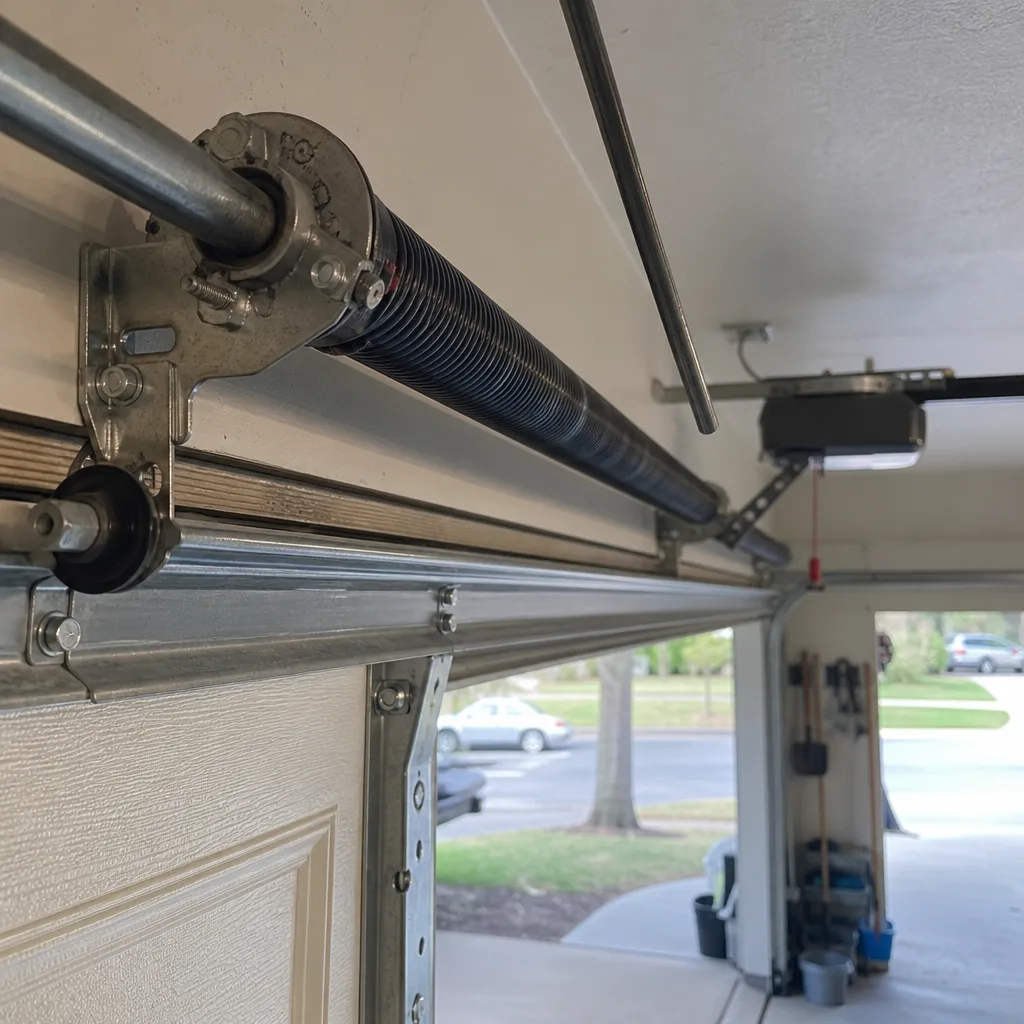
Look above the door. Torsion springs are mounted on a horizontal steel shaft directly above the door opening, usually one or two springs wound tightly. Extension springs are mounted along the horizontal tracks on either side of the door, stretching and contracting as the door moves. If you see springs above the door on a shaft, you have a torsion system. Do not attempt spring work on either type.
Remote battery replacement, keypad programming, and visual inspection of weatherseal condition are appropriate for any homeowner regardless of age. Opener replacement requires ladder work and overhead lifting that may not be suitable for all seniors. We offer a permanent 5% senior discount on all services, and our $89 Seasonal Tune-Up includes safety inspection, lubrication, and adjustment without the homeowner needing to climb or lift. Call (817) 241-8437 to schedule.
The Bottom Line
The DIY versus professional question is not about your competence. It’s about which components store enough energy to cause serious harm. Opener replacement, weatherseal, and keypad programming are reasonable homeowner projects with proper tools and patience. Torsion springs, cables, and structural work belong to trained technicians with the right equipment and insurance.
Arlington’s climate, soil conditions, and wind exposure add variables that generic guides don’t address. A repair that’s straightforward in Phoenix or Minneapolis may require different materials, techniques, or safety considerations here. Local knowledge matters.
When you’re uncertain, a free second opinion costs nothing and confirms your path. When the task involves genuine hazard, professional service is not an expense. It’s the square deal that keeps your home safe, your insurance valid, and your door running right for years.
Written by Carl Dutton, Owner at Mainspring Garage Door Co., serving Arlington since 2016.