
Last updated September 10, 2026
Full 25-point door and opener safety check with every visit - springs, cables, rollers, tracks, and your LiftMaster or Chamberlain opener included
You get a price before we start. It does not change when the truck arrives.
 Before
 After
After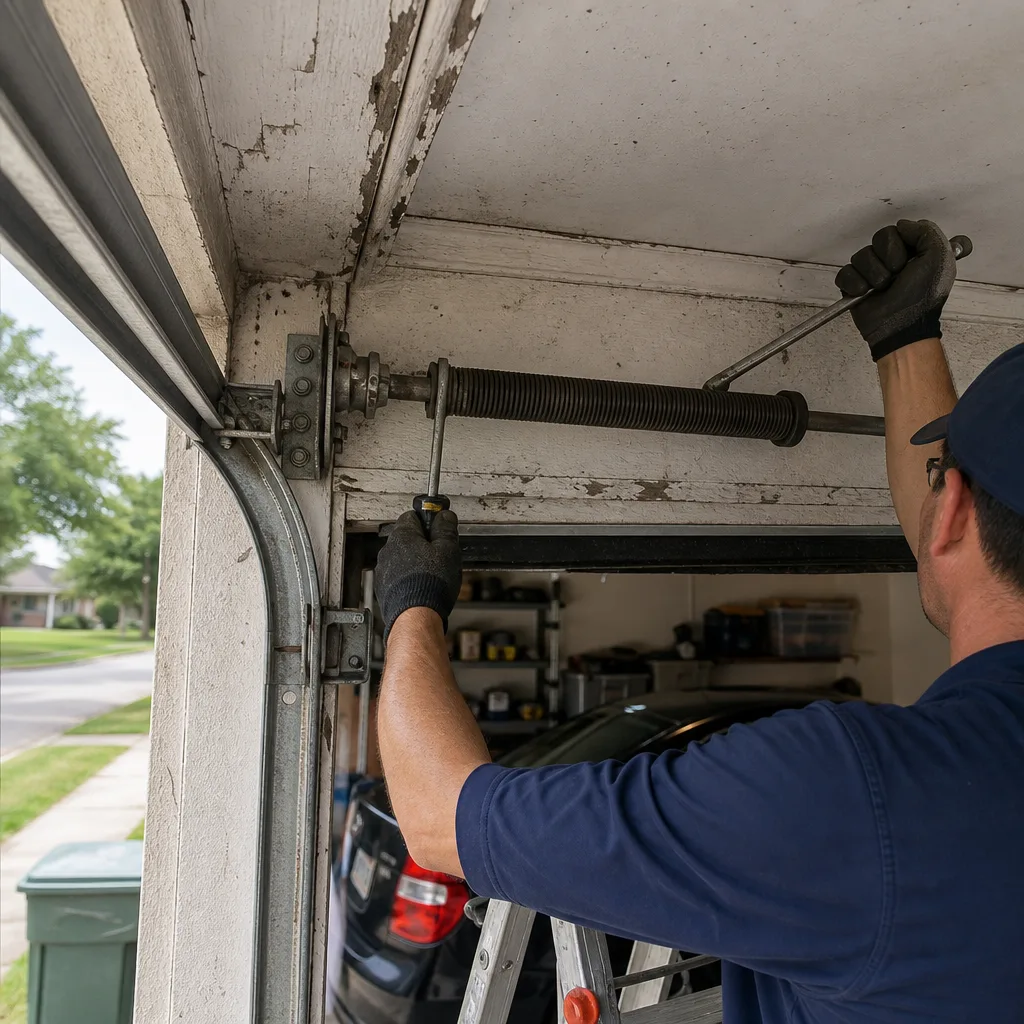 Before
 After
After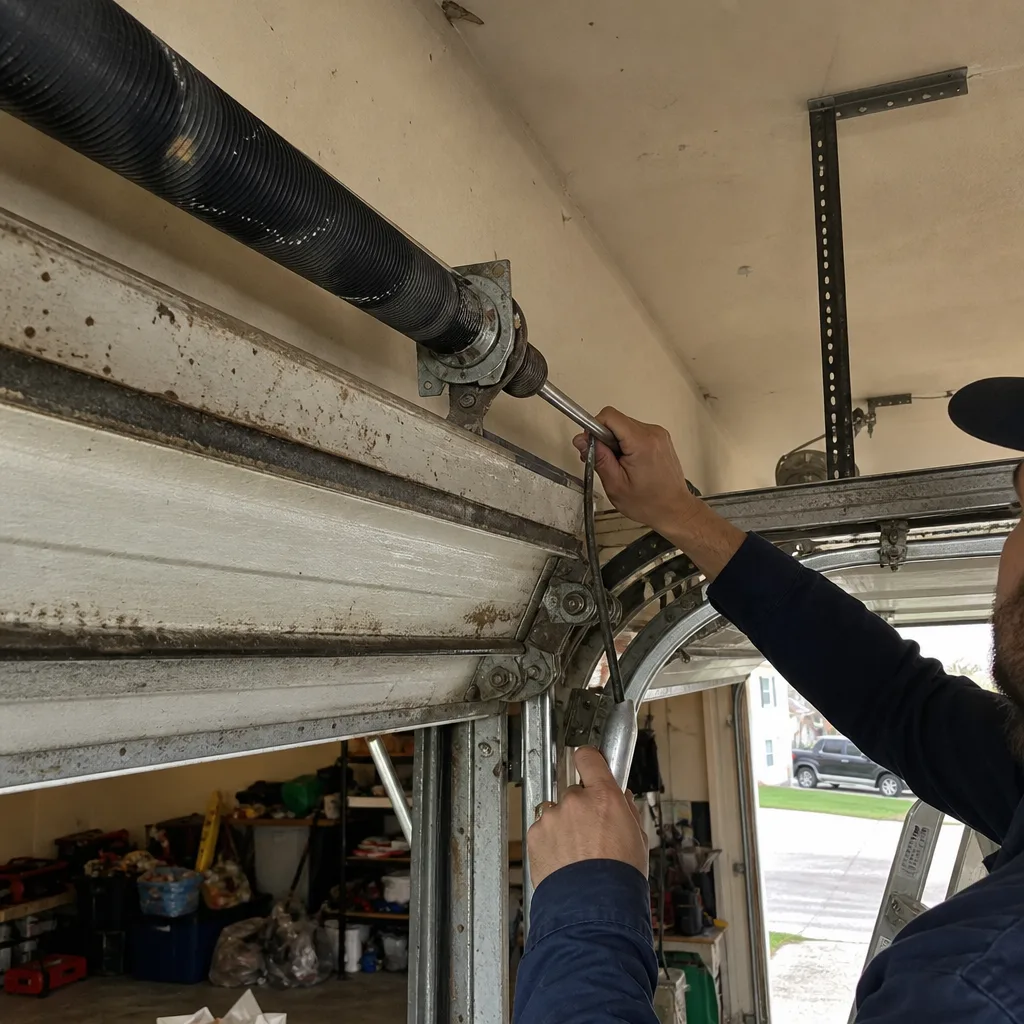 Before
 After
AfterGarage Door Repair Maintenance Checklist for Arlington Homeowners
Lubricating your garage door hinges every six months is good advice. Lubricating them with WD-40 in Arlington heat is how you strip the grease off and accelerate wear. The details matter more than the checklist.
Most maintenance guides online are copied from national home-improvement sites and ignore what actually breaks doors in Tarrant County: 100-degree days that thin out grease, sudden spring storms that blast dust past cracked weatherseals, and soil movement that slowly tilts tracks out of plumb. We’ve spent 42 years fixing the consequences of well-meaning homeowners following generic advice-see our Garage Door Repair services for what we handle daily. This checklist is built for Arlington’s climate, your specific door, and the goal of never having to think about it again.
Quick Answer
A proper garage door maintenance routine for Arlington homeowners includes quarterly visual inspections of springs and cables (without touching them), bi-annual lubrication with lithium-based grease on metal-to-metal contact points, annual weatherseal checks for storm and dust damage, and a simple balance test every season using a broomstick. Done consistently, this prevents the three most common failure calls we receive in Tarrant County: broken springs, opener strain from unbalanced doors, and track misalignment from neglected hardware. For deeper reading, see our guide to Garage Door Warning Signs: A Arlington Homeowner’s Reference Guide.
Table of Contents
- Lubrication: What Works in Arlington Heat
- Spring and Cable Inspection: The Safe Visual Check
- Weatherseal Inspection for North Texas Storms and Dust
- The Broomstick Balance Test
- Hardware, Rollers, and Track Alignment
- Opener Force Settings and Safety Reversal
- What to Log and Keep
- Your Arlington Seasonal Maintenance Calendar
Lubrication: What Works in Arlington Heat
Arlington’s summer heat is not a footnote. It’s the primary reason lubrication fails.
WD-40 is a solvent and a water displacer, not a lubricant. In July heat topping 100 degrees in South Arlington and Pantego, it evaporates or runs off metal surfaces within weeks. What remains is bare steel grinding on bare steel. We’ve replaced hinge pins in Interlochen doors that were “maintained” monthly with WD-40 and wore through in eighteen months.
Silicone spray has its place, but it’s limited. It works well on plastic rollers and weatherseal contact surfaces where you want slip without petroleum residue. It does not hold up under the load and friction of hinge pins, spring coils, or bearing plates.
For Arlington, we recommend lithium-based white grease. It stays where you put it, resists heat thinning, and maintains viscosity through temperature swings from January freezes to August afternoons. Apply it sparingly: a pea-sized amount on each hinge pin, a thin film on the bearing plate where the torsion tube rotates, and a light coat on the spring coils themselves.
Where to apply:
- Hinge pins: Lift the door to knee height so the hinge knuckles are flexed. Work grease into the pin where the leaves meet. Wipe excess; attracts dust.
- Roller stems: If steel rollers, light coat on the stem where it rides in the hinge. If nylon rollers, skip this; grease degrades the bearing.
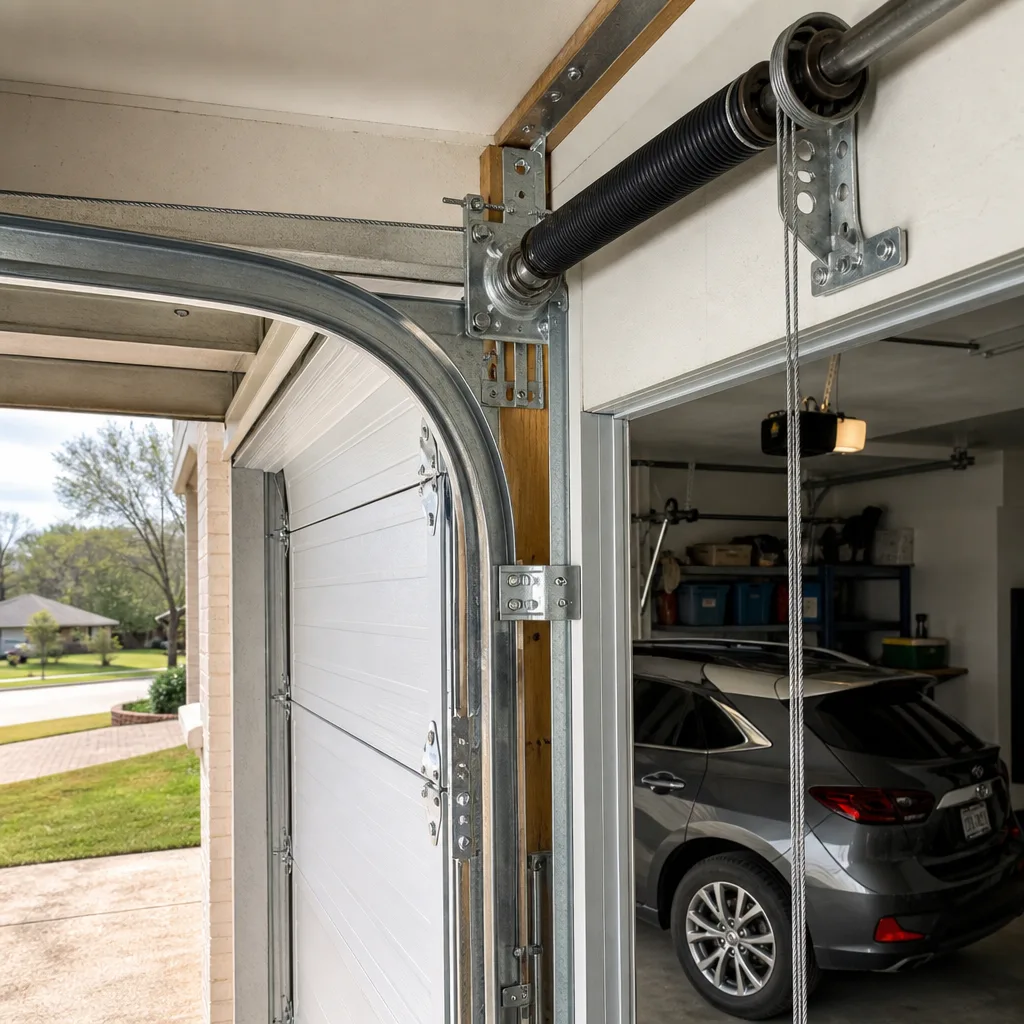
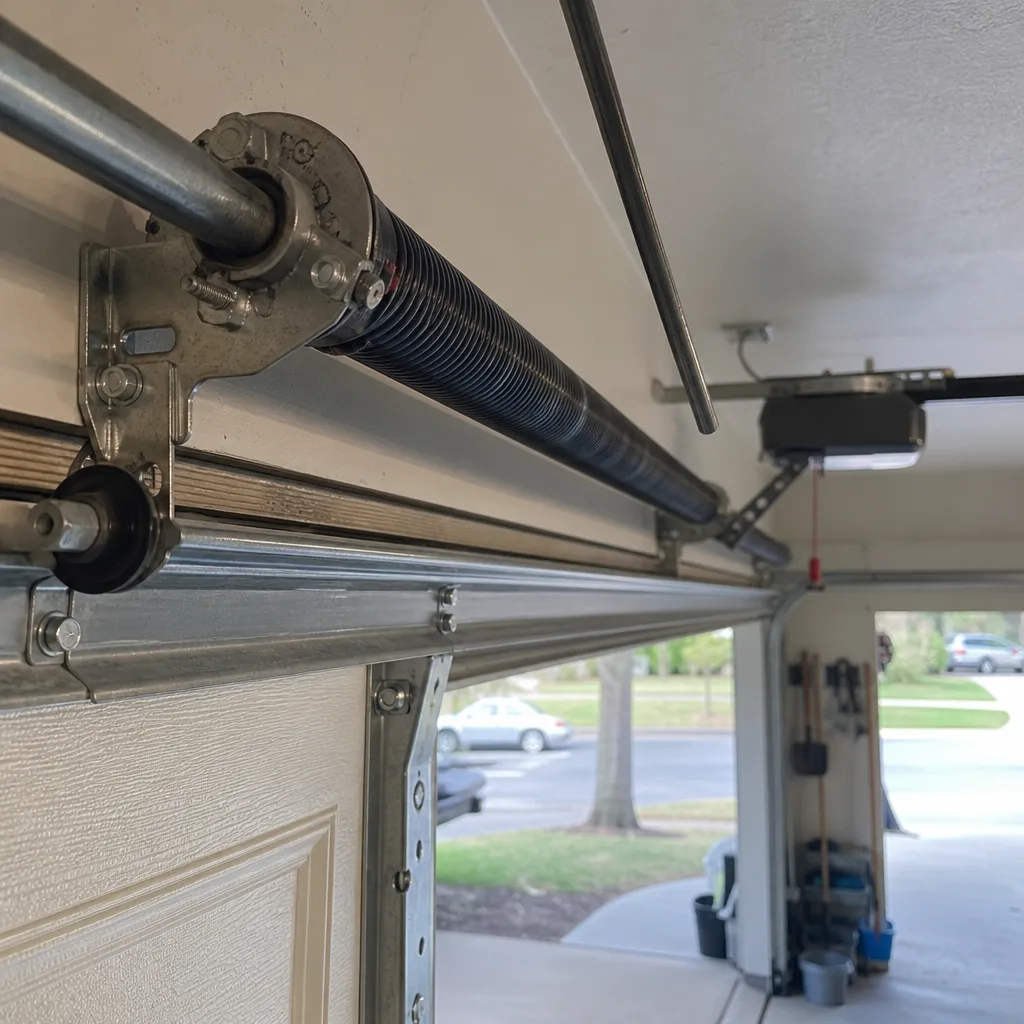
- Bearing plates: The circular plates at each end of the torsion spring tube. This is where the tube rotates hundreds of times monthly. A thin film reduces noise and wear.
- Spring coils: Light spray or brush application across the coils. This reduces friction between active coils when the spring winds and unwinds.
- Lock mechanism: If your door has a manual lock, work grease into the moving parts. Dry locks seize and get forced, bending hasps.
Never apply lubricant to: the track interior (attracts grit), the chain or belt of the opener (manufacturer-specific; wrong product voids warranty), or the bottom of the rollers where they contact the track (causes slip and misalignment).
Frequency: twice yearly, ideally late March before the heat arrives and late October after it subsides. If your door faces west and gets afternoon sun directly on the hardware, consider March, June, and October.
Spring and Cable Inspection: The Safe Visual Check
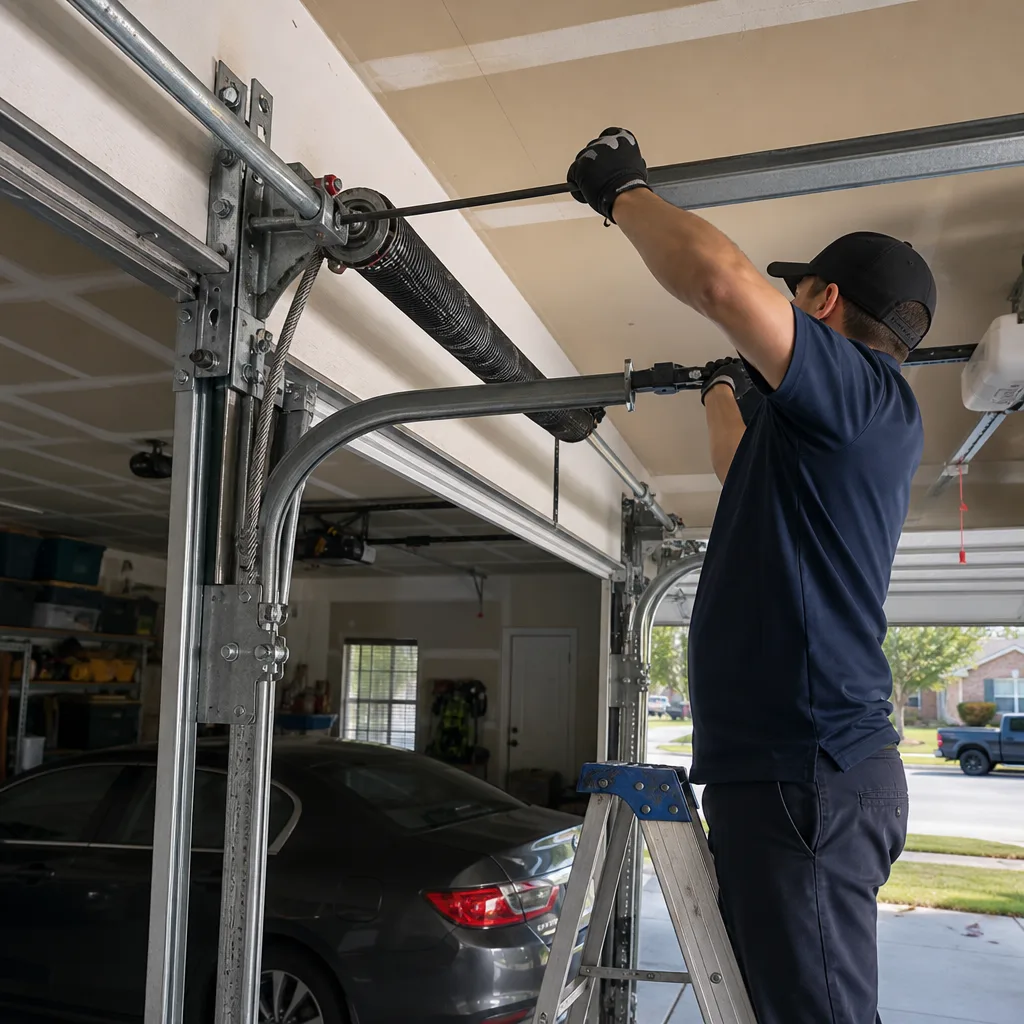
Torsion springs carry the full weight of your door, typically 150 to 250 pounds for a standard double-car door. Extension springs, common on older Arlington homes in neighborhoods like Dalworthington Gardens, store energy by stretching. Both can cause serious injury if handled improperly. The goal of homeowner inspection is to spot problems early, not to fix them yourself.
What to look for on torsion springs:
- Gaps between coils: A gap of even a quarter-inch in a tightly wound spring indicates a broken inner coil. The door may still operate if the second spring shares load, but failure is imminent.
- Rust and corrosion: Red-brown flaking on the coil surface. Arlington’s humidity spikes before spring storms accelerate this. Rust weakens the steel and creates stress risers where the spring breaks.
- Coil distortion: Any coil that sits unevenly, bulges outward, or no longer sits parallel to its neighbors. This indicates metal fatigue.
- End cone condition: The cones at each end of the spring should sit square in the bearing plate. Tilt or wobble suggests the spring is unwinding unevenly.
What to look for on cables:
- Fraying: Any unwound strand, bird-caging, or fuzzy appearance. Cables are wound from many thin wires; one broken strand means others are stressed.
- Kinking: A sharp bend or flat spot where the cable was pinched. Kinks create weak points that fail under shock load.
- Bottom bracket attachment: The cable should enter the bracket cleanly, not at an angle. Angled entry means the cable is rubbing the drum or the door is out of plumb.
- Drum position: The cable should wind evenly on the drum, not overlap or bunch at one end. Uneven winding indicates door imbalance or drum wear.
Safety rule: If you see any of these conditions, do not operate the door. A failing spring or cable can release stored energy without warning. In our experience, most Arlington homeowners who attempt spring adjustment or cable replacement themselves either damage the door or injure themselves. The flat price for professional spring replacement includes the correct spring for your door’s weight, safe installation, and our 90-Day Done Right Promise.
Weatherseal Inspection for North Texas Storms and Dust
Arlington sits at the edge of Tornado Alley, and our spring storm season is not gentle. Straight-line winds of 60 to 80 mph drive rain horizontally against garage door bottoms. Summer dust storms from dry lakebeds west of the metroplex force fine grit past compromised seals. The weatherseal is your door’s only defense, and it’s the most neglected component we see.
The three-seal inspection sequence:
- Bottom seal (ground contact): Close the door and look at the gap between the door bottom and the concrete. Light visible? The seal is compressed or torn. In Arlington, where clay soil expands and contracts, garage floors often develop a slight crown or depression at the threshold. The seal must conform to this irregularity. A rigid vinyl seal leaves gaps; a flexible rubber bulb seal adapts better. Check for rodent damage, too. We’ve found chewed seals in Creekmore Park and surrounding areas where field mice seek summer shelter.
- Jamb seals (sides): The vinyl or rubber strips nailed to the door frame. Look for brittleness, cracking, or pulling away from the fasteners. Arlington’s UV exposure is intense on south and west-facing doors; UV-degraded vinyl becomes stiff and loses its seal. Press the seal against the closed door; it should compress slightly and spring back. If it stays flattened, it’s lost resilience.
- Top seal (header): Often omitted from homeowner checks. Water running down the door face pools at the top if the header seal is gone, then runs inside when the door opens. Check after a hard rain for water staining on the interior header.
Arlington-specific note: If your home was built during the 1980s construction boom in North Arlington or the 1990s expansion around Green Oaks, your door may have a single-channel bottom seal retainer. Modern bulb seals require a double-channel retainer. We carry both types on our trucks and can swap the retainer during a tune-up if needed.
Replacement frequency: every 3-5 years for bottom seals in normal conditions, every 2-3 years if the door faces prevailing winds or gets direct afternoon sun. Jamb seals last longer, 5-7 years, but inspect annually for UV damage.
The Broomstick Balance Test
An unbalanced door overworks the opener, strains the rails, and breaks springs prematurely. The balance test tells you whether the springs are still carrying their share of the weight. It’s simple, requires no tools beyond a broomstick, and takes two minutes.
Step one: Disconnect the opener. Pull the red release cord hanging from the opener trolley. This disengages the door from the opener drive. The door should now move freely by hand.
Step two: Lift to waist height and release. Grasp the door handle or a bottom section and lift smoothly to about three feet off the ground. Let go. A properly balanced door stays put, neither rising nor falling. If it drifts down, the springs are weak or fatigued. If it rises, they’re over-wound or the door is too light for the spring set.
The broomstick check for spring condition: With the door disconnected and closed, slide a broomstick through the spring coils, resting it on the torsion tube. Mark the stick where it exits each end of the spring. Over months, if the spring is unwinding unevenly, the stick will tilt. A tilt of more than a quarter-inch indicates the spring is losing tension asymmetrically. This is early warning of failure, often visible before the balance test shows drift.
Frequency: Test balance at each season change. In Arlington, we recommend March, June, September, and December. The March test catches winter fatigue before spring storm season puts extra cycles on the door. The June test confirms the door isn’t overworking the opener in peak heat.
What imbalance costs you: A door that drifts down forces the opener to hold it closed, burning out the motor or stripping nylon gears in Chamberlain and Genie chain-drive units. A door that rises strains the opener on descent. Either condition voids opener warranties if the manufacturer determines imbalance caused the failure.
If your door fails the balance test, spring adjustment or replacement is needed. This is not a DIY procedure. The torque in a torsion spring can cause severe injury. Our technicians arrive with the correct spring for your door’s weight and height, measure on-site, and install with the door safely secured.
Hardware, Rollers, and Track Alignment
The hardware that holds your door together works loose over time. Vibration from daily operation, thermal expansion from Arlington’s 40-degree temperature swings, and the simple physics of a 200-pound panel system in motion all conspire to loosen fasteners.
Quarterly hardware check:
- Hinge bolts: Check for looseness with a wrench. Do not overtighten; snug is sufficient. Overtightening strips the threads in stamped steel hinges common on Clopay and Amarr doors.
- Track brackets: The brackets that attach the vertical track to the jamb should not move when you grasp the track. Movement indicates loose lag screws or deteriorated wood behind the jamb.
- Bottom fixture bolts: These carry the cable load. Loose bottom fixtures are a primary cause of cable derailment.
- Roller condition: Steel rollers should turn freely, not grind. Nylon rollers should roll quietly; squealing indicates bearing failure. Replace rollers when the wheel shows flat spots or the stem wobbles in the hinge.
Track alignment: The vertical tracks should be plumb, parallel to each other, and spaced so the rollers ride centered without rubbing either flange. A simple check: close the door and look at the gap between door edge and track. It should be consistent top to bottom. If the gap widens or narrows, the track has shifted.
In Arlington, we see track misalignment frequently in newer subdivisions like Viridian and Easton Park, where foundation settlement is still occurring in the first five to ten years after construction. The soil here is expansive clay; wet seasons swell it, dry seasons shrink it, and garage door frames move with the walls. A track that was plumb at move-in may need adjustment by year three.
Never attempt to bend track back into shape. Track is engineered to precise tolerances. Bent track causes roller binding, panel stress, and eventual cable failure. We carry replacement track sections and realignment tools on every truck.
Opener Force Settings and Safety Reversal
p>The automatic reversal system is federally mandated and non-negotiable for safety. It also reveals door condition problems before they become expensive.
Monthly force setting test: Place a 2×4 board flat on the floor centered under the door. Close the door using the opener. When the door contacts the board, it must reverse within two seconds. If it does not, the down-force setting is too high. This is common after spring fatigue; the opener compensates by pushing harder. But excessive force crushes objects and, if the safety eyes fail, creates a hazard.
Monthly safety eye test: Start the door closing, then pass a broomstick through the beam between the two photo eyes. The door must reverse immediately. Clean the lenses with a soft cloth; dust from Arlington’s dry spells coats them and reduces sensitivity.
Opener strain indicators: Listen for changes in motor sound. A door that previously ran quietly and now labors, or an opener that stalls at a consistent point in the travel, indicates mechanical resistance. Common causes: dry rollers, track misalignment, or spring fatigue. Addressing these early prevents opener replacement.
Most openers installed in Arlington homes from 2010 to 2020 are chain-drive or belt-drive units from LiftMaster, Chamberlain, or Genie. These manufacturers specify annual inspection of the drive gear assembly. The nylon drive gear in chain-drive openers is a wear item; it strips when the door is unbalanced or the chain is too tight. We stock replacement gears and complete gear assemblies, and can assess whether gear wear or door condition is the root cause.
What to Log and Keep
A maintenance log turns guesswork into diagnosis. When a technician arrives at a door that’s been in place for fifteen years, the first question is always: what’s been done, and when? Homeowners who keep records get faster, more accurate repairs and avoid redundant work.
Keep a simple file with:
- Door specifications: Manufacturer (Clopay, Amarr, Wayne Dalton, etc.), model if known, size, and construction material. This is often on a sticker inside the top section or on the track.
- Spring specifications: Wire size, inside diameter, length, and wind direction. A technician can read this from the existing spring, but having it recorded saves time and ensures the replacement matches.
- Opener model and date: Including remote frequency and any smart-home integration.
- Maintenance dates and actions: What you did, what products you used, and any observations.
- Repair history: Dates, what failed, what was replaced, and by whom. This reveals patterns. Three spring replacements in eight years suggests the wrong spring was installed initially or the door is binding.
- Photos: Annual photos of spring condition, cable routing, and weatherseal state. Date-stamped photos show progression that memory obscures.
When you call Mainspring Garage Door Co. for service, mention that you have maintenance records. Our technicians review them before arriving, and the information often cuts diagnosis time in half. A door with documented annual lubrication and a recent balance test tells us to look at hardware and opener issues first, not assume neglect.
Your Arlington Seasonal Maintenance Calendar
Arlington’s climate demands a schedule that matches actual stress points, not arbitrary calendar dates.
March: Pre-storm preparation
- Inspect weatherseals for winter brittleness
- Test balance after cold-weather contraction
- Lubricate all metal-to-metal points
- Check safety reversal system
- Photograph spring condition for comparison
June: Heat stress check
- Verify lubricant has not thinned or run off
- Test opener force settings; heat-expanded components increase resistance
- Inspect jamb seals for UV degradation
- Check bottom seal for compression set from repeated hot-floor contact
September: Post-summer recovery
- Re-lubricate if June inspection showed thinning
- Test balance; summer cycling may have fatigued springs
- Inspect hardware for looseness from thermal cycling
- Clean safety eye lenses of summer dust accumulation
December: Winter readiness
- Final lubrication before cold reduces grease flow
- Inspect weatherseals for rodent damage as temperatures drop
- Test balance; cold-contracted springs may show weakness
- Verify opener battery backup if equipped; cold reduces capacity
For homeowners who prefer not to manage this schedule, our $89 Seasonal Tune-Up covers all these points in a single visit. We document findings, update your maintenance record, and flag any developing issues before they become emergency calls.
Common Mistakes to Avoid
- Using WD-40 as lubricant: It strips existing grease and evaporates in Arlington heat. We’ve replaced hardware in Parkdale and Handley that was “maintained” this way for years.
- Ignoring a single broken spring on a double-spring door: The remaining spring carries double load and fails catastrophically, often damaging the door or opener. Replace springs in matched pairs.
- Tightening track brackets without checking plumb: A loose bracket may be loose because the wall shifted. Tightening it pulls the track out of alignment. Check the wall first.
- Testing the safety reversal with a lightweight object: The federal test specifies a 2×4. A cardboard box or pool noodle doesn’t verify that the force setting is safe for a child or pet.
- Applying grease to nylon rollers: Petroleum-based lubricants degrade nylon bearings. Use silicone spray sparingly, or better, replace nylon rollers when they become noisy; they’re inexpensive wear items.
- Skipping maintenance on a “new” door: Doors installed during the 2021-2023 construction surge in Arlington are now entering their first maintenance cycle. New hardware loosens as it beds in. The first-year inspection is critical.
- Attempting spring or cable work without training: The injury rate for DIY spring repair is significant. The flat price for professional repair includes safety, correct parts, and our written guarantee. No surprise on the bill offsets any perceived savings from DIY.
When to Call a Professional
Some conditions are not maintenance; they’re warnings. Call a technician if you hear a loud bang from the garage (spring failure), if the door hangs crooked in the opening (cable or roller failure), if the opener runs but the door doesn’t move (drive gear or trolley failure), or if the door reverses inconsistently (track or spring issue). These are not user-serviceable conditions.
Also call if your door lacks a containment cable on extension springs, common on pre-1993 installations in older Arlington neighborhoods. A broken extension spring without containment can cause serious injury or property damage. We install containment cables during any service call at no additional charge if missing.
Mainspring Garage Door Co. offers free estimates in Arlington. Carl Dutton and our team arrive with the parts to complete most jobs in a single visit, state the flat price before any work begins, and back every completed job with our 90-Day Done Right Promise in writing. Call (817) 241-8437 to schedule or ask questions.
Frequently Asked Questions
Twice yearly, in late March and late October, using lithium-based white grease on metal-to-metal contact points. If your door faces west and receives direct afternoon sun, add a mid-summer application in June. Call (817) 241-8437 if you’re unsure which lubricant is correct for your hardware.
No. Torsion springs store lethal energy and require specialized winding bars and training. Extension springs without containment cables are equally dangerous when they fail. In 42 years of service, we’ve treated too many preventable injuries. The flat price for professional spring replacement includes safe installation, correct spring specification, and our written 90-Day Done Right Promise.
Heat expands metal components and thins lubricant, increasing mechanical resistance. The opener works harder against the same door. Often the root cause is spring fatigue or dry rollers, not the opener itself. A seasonal tune-up identifies whether the problem is door condition or opener wear.
Standard springs are rated for 10,000 cycles. For a door used four times daily, that’s roughly seven years. Arlington’s temperature extremes and humidity spikes can shorten this by accelerating corrosion and metal fatigue. High-cycle springs (25,000 to 50,000 cycles) are available and cost-effective for active households.
Verify the weatherseal is intact, the door is balanced, and the opener force settings are correct. A balanced door with good seals resists wind pressure better. If you have a manual lock, engage it during the storm; this prevents wind from forcing the door open and damaging the opener. Never rely solely on the opener to hold against severe wind.
We offer a $89 Seasonal Tune-Up that covers all points in this checklist, documented with findings and recommendations. Many Arlington homeowners in established neighborhoods like Woodland West and Prestonwood schedule these annually. There is no subscription or contract; book when it suits you. Seniors and veterans receive our permanent 5% discount.
The Bottom Line
Garage door maintenance in Arlington is not about following a generic checklist. It’s about understanding how 100-degree days, spring storms, and expansive clay soil specifically stress your door, then acting before those stresses become failures. The right lubricant, a two-minute balance test, and honest weatherseal inspection prevent the majority of emergency calls we receive. Keep records, respect the danger in springs and cables, and know when a professional eye saves money and risk. Explore more guides & resources on our blog. Done consistently, this routine means your door simply works, season after season, without surprise.
Written by Carl Dutton, Owner at Mainspring Garage Door Co., serving Arlington since 2016.