
Last updated September 10, 2026
Full 25-point door and opener safety check with every visit - springs, cables, rollers, tracks, and your LiftMaster or Chamberlain opener included
You get a price before we start. It does not change when the truck arrives.
 Before
 After
After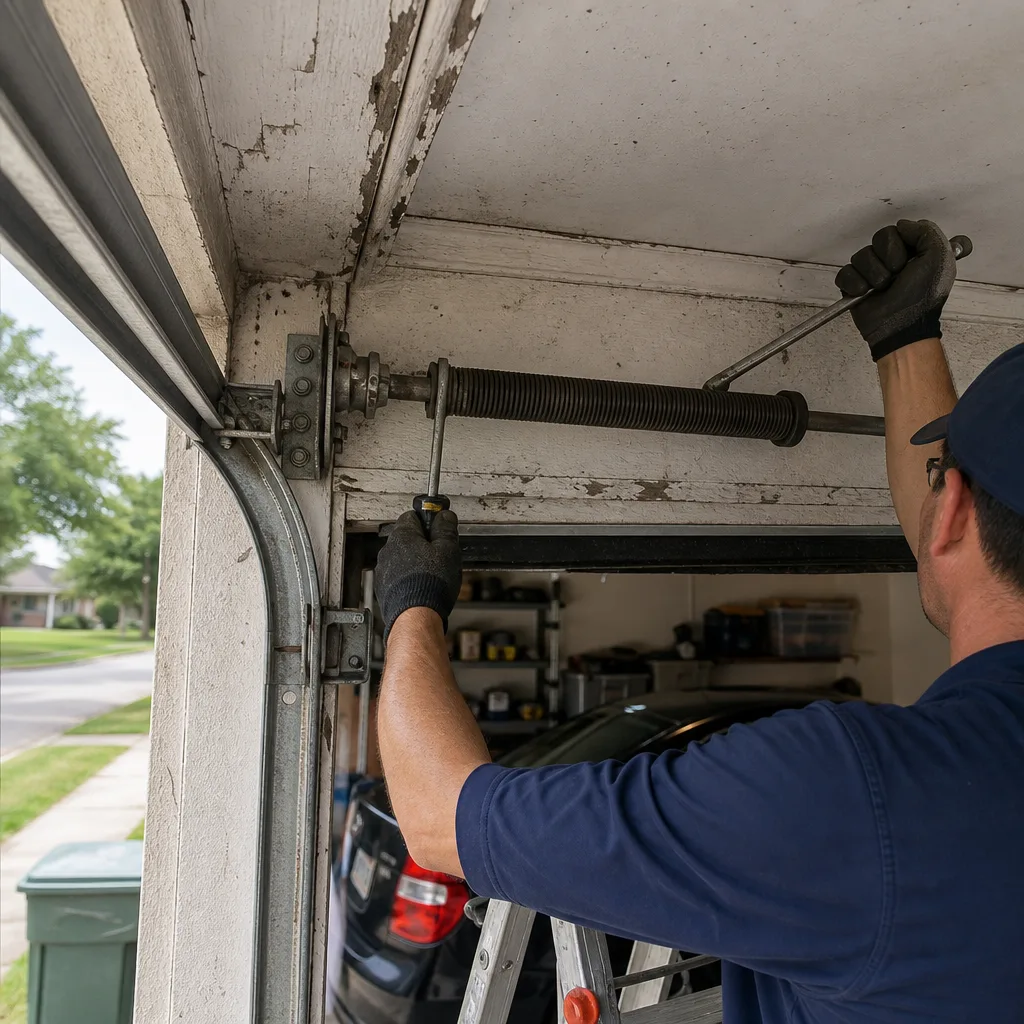 Before
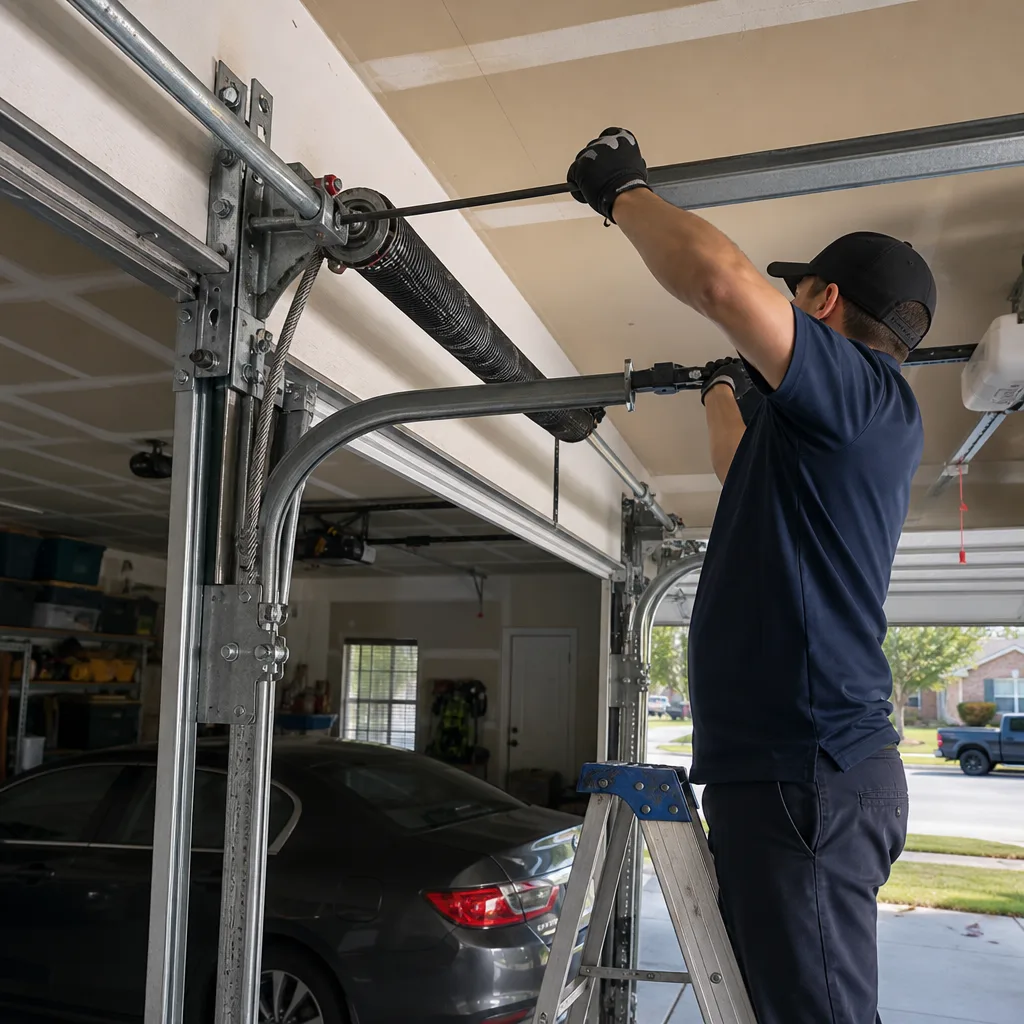 After
After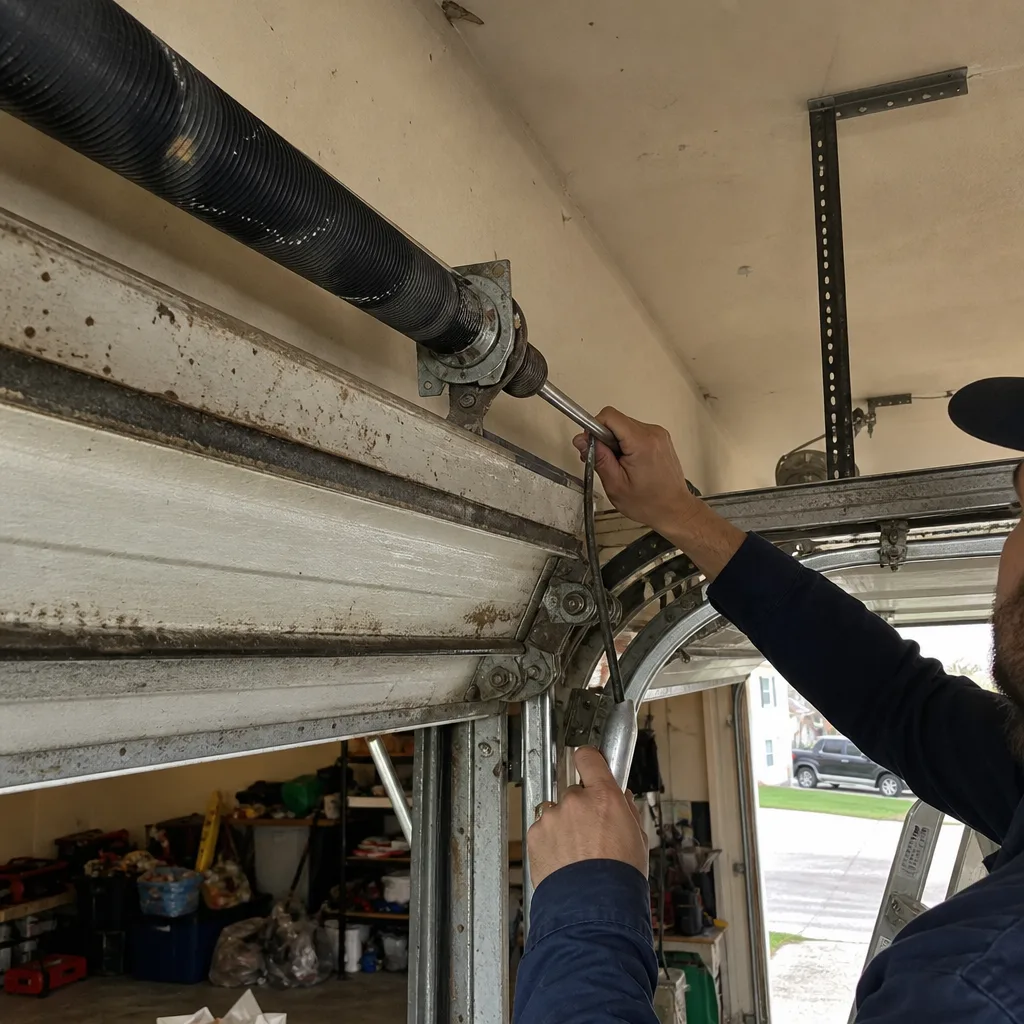 Before
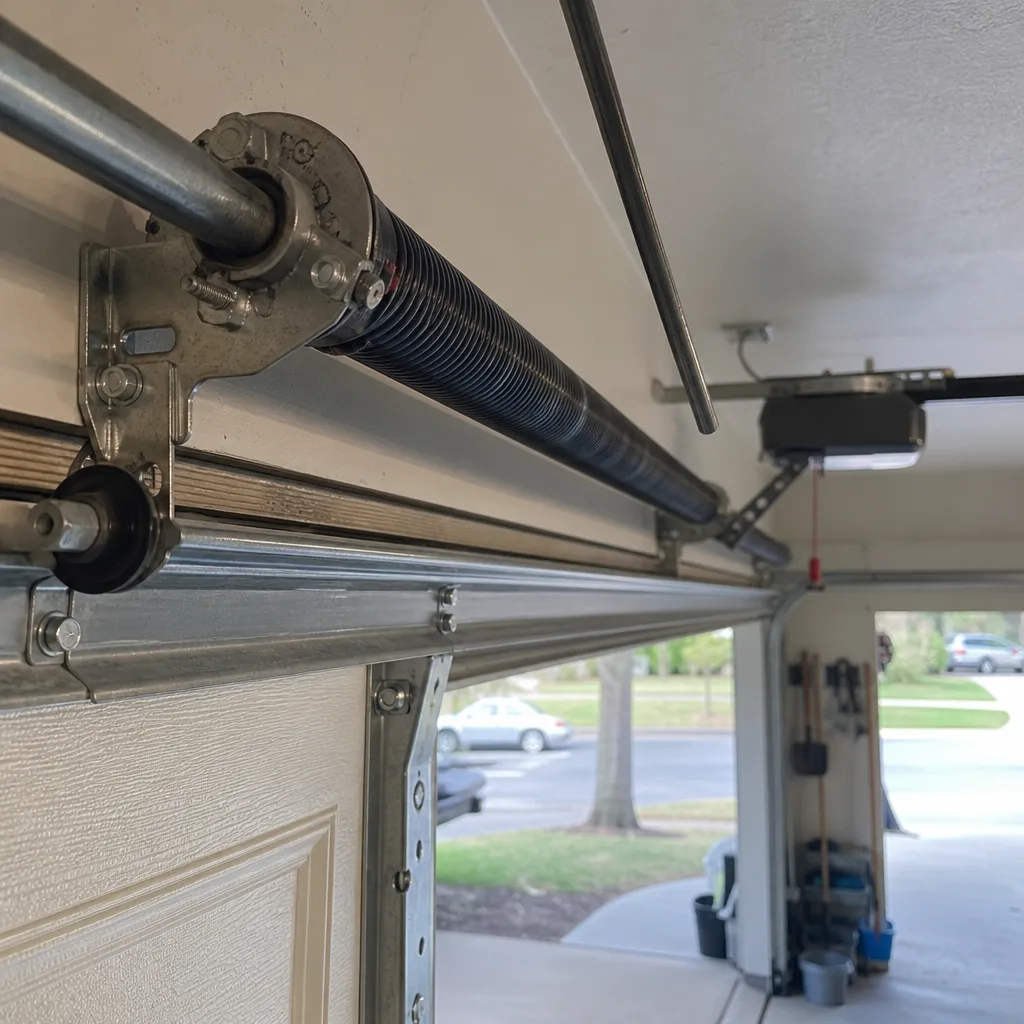 After
AfterGarage Door Warning Signs: A Arlington Homeowner’s Reference Guide
That slight hesitation before your garage door lifts? It is not aging gracefully. In our 42 years serving Arlington, we have watched that same hesitation turn into a door that drops without warning, usually on a car or a person. Most garage door failures announce themselves weeks in advance through sounds, movements, and visual cues that homeowners dismiss as normal wear. This guide - alongside our Complete Guide to Garage Door in Arlington - teaches you to read those signals correctly, so you know when to schedule maintenance and when to stop using the door entirely. Arlington’s hot summers and occasional ice storms accelerate certain failures, making early recognition especially valuable here.
Quick Answer
Garage door warning signs fall into four categories: abnormal sounds (grinding, banging, clicking), irregular movement (hesitation, sagging, reversing), visible wear (frayed cables, rust patterns, cracked panels), and safety system failures (door does not reverse on contact, sensors misaligned). Most Arlington homeowners should run a monthly safety test and schedule professional inspection when any warning sign persists beyond a few cycles.
Table of Contents
- Sound Diagnosis: What Your Garage Door Is Telling You
- Movement Diagnosis: Reading the Motion
- Visual Inspection: Rust, Wear, and Structural Signals
- The Monthly Safety Test Every Arlington Homeowner Should Run
- Watch It or Stop Using It: The Decision Threshold
- How Arlington’s Climate Accelerates Specific Failures
- Common Mistakes to Avoid
- When to Call a Professional
- Frequently Asked Questions
Sound Diagnosis: What Your Garage Door Is Telling You
Every sound a garage door makes has a source, and most sources predict a specific failure. Learning to match sound to component saves you from the surprise of a door that will not open at all.
Grinding noise: This is metal on metal, usually rollers worn past their bearings or hinges that have lost lubrication. In older Arlington neighborhoods like Dalworthington Gardens and Pantego, we see this frequently on doors installed in the 1990s with original steel rollers. The grinding means the roller is no longer turning; it is sliding inside the track, scoring both the roller and the track surface. Left alone, the roller will seize entirely, and the opener will either strip its gear or burn out its motor trying to lift a door with a seized roller.
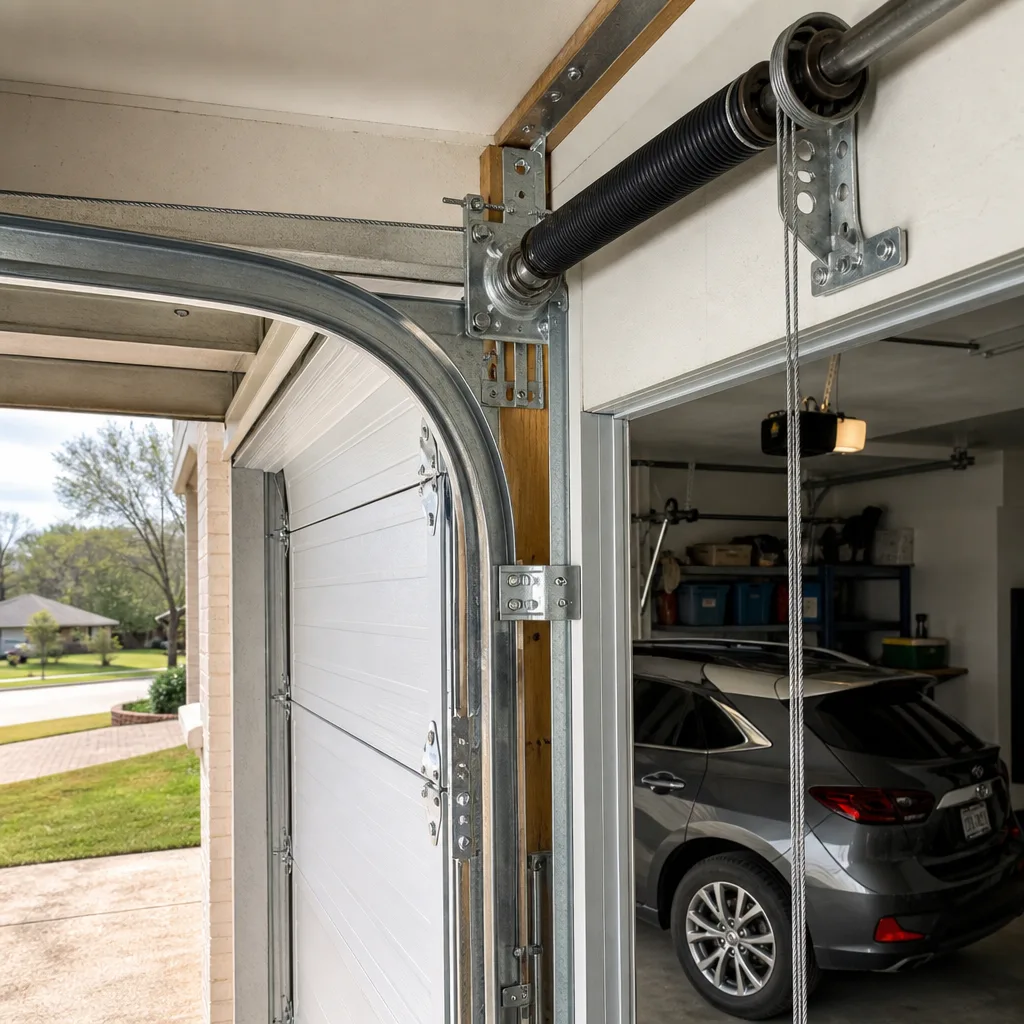
Loud bang or snap: This is almost always a broken spring. Torsion springs store enormous energy, roughly 100 to 200 pounds of torque on a standard residential door. When one breaks, the release sounds like a gunshot. If you hear this from inside your house, do not attempt to open the door. The remaining spring (if you have a two-spring system) is carrying double its design load and is likely to break soon. The door itself now weighs its full 150 to 250 pounds, which will damage the opener if you try to run it. Garage door repair in Arlington for spring replacement requires specialized tools and training; this is not a DIY job.
Rhythmic scraping: The door is contacting the track frame or the header. This indicates track misalignment, often from a bent vertical track or loose jamb brackets. In Arlington, we see this after minor vehicle contact, people bumping the track with lawn equipment, or foundation settling common in the clay soils of Tarrant County. The scraping will worsen with each cycle, eventually binding the door completely.
Clicking or popping at regular intervals: This is typically a cable issue. Cables wind and unwind around pulleys or drums as the door moves. A frayed cable catching on itself, a worn pulley with a flat spot, or a cable that has jumped its drum groove will produce a regular click. The interval matches the door’s travel distance per cable wrap. Cables under tension can snap without warning; a clicking cable is a cable preparing to fail.
Squealing during opener operation: This often comes from the opener itself, not the door. Chain-drive openers need periodic lubrication; belt-drive units are quieter but still have sprockets and gears. If the squeal persists after lubricating the rail, the motor gear or sprocket may be wearing. We carry replacement gears for most major brands including LiftMaster, Chamberlain, and Craftsman on our trucks, so this is usually a single-visit fix.
Key takeaway on sound: Record a video of the noise on your phone. Play it for the technician when you call. We can often identify the component from the recording, which lets us bring the exact part and complete the repair in one trip.
Movement Diagnosis: Reading the Motion
A properly balanced garage door moves smoothly and evenly. Any deviation from that smooth motion indicates a mechanical problem that will worsen.
Hesitation on startup: The door starts to move, pauses, then continues. This is the classic sign of weakening springs. Springs counterbalance the door’s weight; when they lose tension, the opener must overcome the full dead weight of the door before momentum helps. In Arlington’s heat, springs fatigue faster than in cooler climates. A door that hesitated last week will struggle more this week. The endpoint of this progression is a door that does not open at all, or a spring that breaks during the strain of startup.
Uneven rising or sagging on one side: One side of the door lifts faster than the other, or one bottom corner hangs lower. This indicates a failing spring on one side, a frayed or stretched cable, or a door that has jumped its track on one side. Operating the door in this condition twists the door panel, damages the opener’s drive system, and risks the door falling off the track entirely. Stop using the door immediately.
Door reverses before fully closing: The safety sensors are misaligned, obstructed, or failing. But if the sensors check out clean, the problem may be excessive friction in the door system causing the opener to interpret resistance as an obstruction. Check for binding in the tracks, a damaged bottom roller, or a warped door panel. In Arlington, direct summer sun can heat safety sensors to the point of false triggering, especially on west-facing doors in the afternoon.
Door falls too fast when closing manually: Disconnect the opener and lift the door halfway, then release. A properly balanced door stays in place. A door that drops has lost spring tension. This is dangerous; the door can accelerate and crush anything below it. Do not operate the door until springs are replaced.
Door requires excessive force to lift manually: Same problem, different test. The springs are not providing enough counterbalance. The opener is working harder than designed, shortening its lifespan. We see this frequently on doors in Arlington’s newer developments like Viridian and East Arlington, where builders sometimes install minimum-spec springs to save cost. Those springs fatigue faster than properly rated ones.
Opener strains or lights dim: The motor is working harder than it should. This may be spring failure, seized rollers, or a door that is binding in the tracks. The opener is not the problem; it is revealing the problem. Replacing the opener without fixing the underlying mechanical issue wastes money and voids the new opener’s warranty.
Visual Inspection: Rust, Wear, and Structural Signals
Not all corrosion is equal. Knowing what rust on which component means tells you whether you have months or days before failure.
Rust on cables: Cables are made of braided steel wire. Surface rust that wipes off with a rag is cosmetic. Rust that has penetrated between strands, causing the cable to swell or stiffen, means the cable has lost significant strength. A rust-swollen cable will not seat properly in its drum groove and will eventually snap under load. In Arlington, where humidity swings between summer storms and winter dry spells, cable rust accelerates on doors in unconditioned garages. We replace cables with rust between strands; cleaning and reusing them is not worth the risk.
Rust on tracks: Track rust is usually less critical unless it has pitted the rolling surface. Light surface rust can be cleaned and the track re-lubricated. Pitted tracks create roller resistance and will eventually tear up replacement rollers. In coastal-influenced areas of Arlington near Lake Arlington, we see more aggressive track corrosion from higher humidity. If the rust has reduced the track wall thickness or created sharp edges, the track section needs replacement.
Rust on the torsion shaft: The solid steel shaft that carries the spring assembly rarely fails from rust alone. However, rust at the spring collars or cable drums indicates moisture infiltration that may also be attacking the springs themselves. Springs are high-carbon steel and rust-sensitive. A rust-pitted spring is a spring with stress risers that will crack and break prematurely.
Frayed cable strands: Look at the cable where it wraps around the bottom bracket and the drum. Any visible broken strands mean the cable has lost strength and is working the remaining strands harder. A cable with broken strands will fail; the only question is when. We replace both cables as a matched set, even if only one shows fraying. They have the same age and cycles; if one is failing, the other is not far behind.
Cracked or delaminating door panels: Steel doors can rust through from the inside if the factory coating is compromised. Wood doors split along grain lines, especially on south-facing doors in Arlington’s intense sun. Fiberglass doors can delaminate, creating bubbles between the skin and core. Panel damage affects door balance, weather sealing, and security. A cracked bottom panel also risks the bottom roller pulling out.
Worn or missing bottom seal: The rubber seal across the door bottom keeps water, debris, and pests out of your garage. In Arlington, where spring storms can drop significant rain quickly, a missing seal means water intrusion that damages stored items and accelerates corrosion on everything in the garage. The seal is inexpensive and quick to replace.
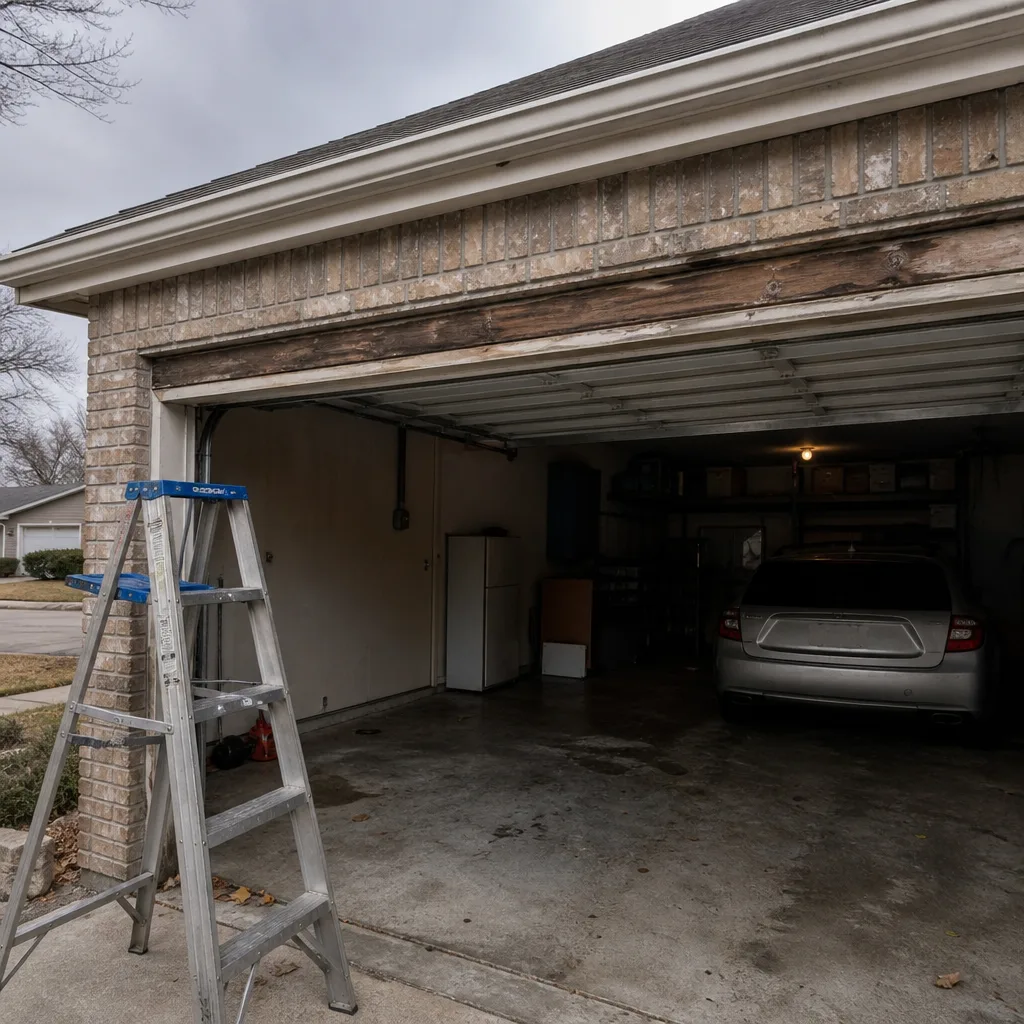
Bent or damaged track sections: Vertical tracks should be plumb; horizontal tracks should slope slightly back toward the opener. Any visible bend, kink, or gap between track sections means the door is not riding true. A door in a bent track will eventually jump the track or bind completely.
The Monthly Safety Test Every Arlington Homeowner Should Run
The federal safety standard for automatic garage door openers requires a reversing mechanism, but the mechanism only works if it is tested and adjusted. This test takes two minutes and should be done monthly.
- Test the mechanical reversal system. With the door fully open, place a 2×4 board flat on the floor in the door’s path, centered under the door. Use a standard 1.5-inch thick board, not a painted or warped piece. Close the door using the wall button (not the remote). When the door contacts the board, it must reverse within two seconds. If it does not reverse, or if it reverses only after crushing the board, the opener’s down-force limit needs adjustment. Do not adjust this yourself; the setting affects safety and is specific to your door weight.
- Test the photoelectric sensors. With the door opening, pass your foot through the sensor beam. The door must reverse immediately. The sensors should be mounted 6 inches above the floor, aligned with each other (both indicator lights solid, not blinking), and free of spider webs, leaves, or stored items. In Arlington, we see sensors knocked out of alignment by kids, pets, and garage clutter more often than actual component failure.
- Test the emergency release. Pull the red release cord with the door closed. The trolley should disconnect, allowing you to lift the door manually. If the door is too heavy to lift smoothly, the springs need attention. Re-engage the trolley by running the opener until the carriage reconnects.
- Inspect the cables and springs visually. Look for gaps in torsion springs (a broken spring will have a visible separation), frayed cables, and rust. Do not touch or attempt to adjust springs or cables. If you see anything concerning, call for service before using the door again.
If any test fails, stop using the automatic function and call for service. A door that fails the reversal test is a safety hazard to children, pets, and property. Garage door opener service in Arlington includes safety system testing and adjustment as standard procedure.
Watch It or Stop Using It: The Decision Threshold
Some warning signs mean schedule service this week. Others mean do not operate the door until repaired. Knowing the difference prevents injury and limits damage.
Schedule service within the week:
- Grinding or squealing noise that started recently
- Slight hesitation on startup that is worsening
- Remote requires multiple presses
- Bottom seal worn or missing
- Minor rust on tracks that wipes clean
- Door reverses occasionally but sensors appear clean
Stop using the door immediately:
- Any loud bang or snap (probable spring break)
- Door sags on one side or rises unevenly
- Visible fraying or broken cable strands
- Door falls when released at half-height
- Door jumps the track or binds in operation
- Opener strains, smokes, or trips its overload
- Broken glass in door panels
- Any visible gap in a torsion spring
The cost of an emergency service call is minor compared to the cost of a door that falls on a vehicle, or an opener that burns out and needs full replacement. In 42 years, we have seen every variation of “I thought I could get a few more weeks out of it.” The door always wins that bet.
For garage door installation in Arlington, the same principle applies: a door that is failing structurally cannot be patched indefinitely. At some point, replacement is the safer and more economical choice.
How Arlington’s Climate Accelerates Specific Failures
Arlington’s climate creates specific stress patterns that homeowners in milder regions do not face. Understanding these patterns helps you anticipate problems before they become emergencies.
Heat fatigue on springs: Torsion springs are rated in cycles, typically 10,000 for standard springs. But heat accelerates metal fatigue. An Arlington garage that reaches 110 degrees in August is stressing springs beyond their rated environment. We see spring failures cluster in July and August, and again in January when cold-brittled metal meets a door stiff from overnight low temperatures. High-cycle springs, rated for 25,000 or more cycles, are worth considering for Arlington homes.
Humidity cycling on electronics: Opener circuit boards and safety sensors suffer from condensation caused by rapid temperature swings. A garage that cools overnight, then heats rapidly when the door opens to morning sun, creates moisture inside the opener housing. We see more electronic failures in Arlington’s shoulder seasons, March-April and October-November, when daily temperature swings are largest.
Storm damage to door panels and tracks: Arlington sits in Tornado Alley and receives severe thunderstorms with hail and straight-line winds. Hail dents steel panels, sometimes cracking the protective coating and starting rust. Wind-driven debris bends tracks and damages bottom sections. After any significant storm, inspect your door for new damage, especially if you heard impacts during the storm.
Foundation movement from clay soils: Tarrant County’s expansive clay soils shrink in drought and swell in rain, moving garage slabs and walls. A door that operated smoothly in spring may bind by fall as the frame shifts. Track realignment is often needed after dry summers or wet winters. In established neighborhoods like Arlington Heights and Handley, we account for this when installing new doors, using adjustable jamb brackets and leaving appropriate clearances.
UV degradation on seals and exterior hardware: South and west-facing doors take brutal sun. Rubber seals harden and crack. Plastic components on decorative hardware become brittle. Even powder-coated steel can chalk and fade. Annual inspection catches UV damage before it becomes a functional problem.
Common Mistakes to Avoid
- Ignoring a change in sound because “it’s always been a little noisy.” Doors do not get noisier with age unless something is wearing out. That gradual change you normalized is the early warning you missed.
- Applying WD-40 to rollers and tracks. WD-40 is a solvent and water displacer, not a lubricant. It strips existing grease and attracts dust, creating a grinding paste. Use a lithium-based garage door lubricant on metal-to-metal contact points.
- Testing the door by standing underneath it. Never position yourself or anyone else under a moving door to “see what it does.” Use the 2×4 test method described above, or call a professional.
- Replacing the opener when the real problem is the door. A strained opener is usually a symptom. We have replaced openers that failed because of bad springs, only to have the new opener fail within months for the same reason.
- Assuming all rust is cosmetic. Rust on cables, at spring mounting points, or pitting track surfaces is structural. Wiping it and hoping is not a repair strategy.
- Waiting for “both springs to go” before calling. If you have a two-spring system and one breaks, the second is carrying double load and is severely overstressed. It will break soon, probably at the worst possible time.
- Trying to adjust or replace springs from a YouTube video. Torsion springs store lethal energy. In our experience, the injuries from DIY spring work are not minor. They are emergency room visits, sometimes worse. This is not about gatekeeping trade work; it is about physics that does not forgive mistakes.
When to Call a Professional
Call when any warning sign persists beyond a few door cycles, when safety tests fail, or when you are unsure whether a condition is serious. We answer live, 24/7, including nights and holidays, because garage door failures do not observe business hours. Our technicians arrive with springs, cables, rollers, and openers for major brands including Raynor and LiftMaster already on the truck, so most repairs are completed in a single visit. The flat price is stated before any work begins, with no surprises on the bill. Mainspring Garage Door Co. offers free estimates in Arlington - call (817) 241-8437.
Frequently Asked Questions
Spring replacement in Arlington typically runs $180 to $340 for a standard residential door, depending on spring size, cycle rating, and whether one or both springs need replacement. We quote the exact price after measuring your door’s weight and height, and that price is locked before work starts. Call (817) 241-8437 for a free estimate - we can often give you a narrow range over the phone if you know your door size, or explore How to Hire a Garage Door Contractor in Arlington: A Step-by-Step Guide to prepare.
Yes, for repair calls including spring breaks, cable failures, and opener problems, we usually offer same-day service throughout Arlington, Pantego, Dalworthington Gardens, and surrounding areas. Our trucks carry the parts needed for most common repairs, so we complete the job in one visit. Installation and replacement jobs require measurement and ordering, so those are scheduled, not same-day.
No. We state the flat price before any work begins. If we discover additional problems during inspection, we explain them and quote separately. You approve every charge. There are no surprises on the bill, and no pressure to add work you do not want.
We stock springs, cables, rollers, hinges, and openers compatible with LiftMaster, Chamberlain, Craftsman, Genie, Clopay, Amarr, Wayne Dalton, and Raynor. For older or specialty doors, we may need to order a specific part, but we can usually secure it within 24 hours and return to complete the repair.
We recommend a professional inspection and tune-up annually, and our $89 Seasonal Tune-Up includes spring tension check, safety system test, lubrication, and hardware tightening. Given Arlington’s heat and storm exposure, annual service catches problems before they become emergencies. Run the monthly safety test yourself between professional visits.
It depends on the noise. Grinding from worn rollers or hinges is a maintenance issue that will worsen and damage other components. A loud bang is a broken spring and is immediately dangerous. Clicking from cables means imminent cable failure, which can send a door off its track. Any new or worsening noise deserves prompt diagnosis.
The Bottom Line
Your garage door speaks before it fails. The hesitation, the new grind, the slight sag, the rust spot you noticed last month - these are not quirks of an aging door. They are specific signals from specific components, and they give you time to act before the door stops working entirely or becomes unsafe. Learn the sounds, run the monthly test, and know which conditions mean “schedule soon” versus “stop using now.” For more guides & resources, visit our blog. When you need a professional who will quote the flat price upfront, arrive with the right parts, and stand behind the work for 90 days, we are here. Carl Dutton and the team at Mainspring have served Arlington homeowners since 2016, building on 42 years of trade experience.
Written by Carl Dutton, Owner at Mainspring Garage Door Co., serving Arlington since 2016.